




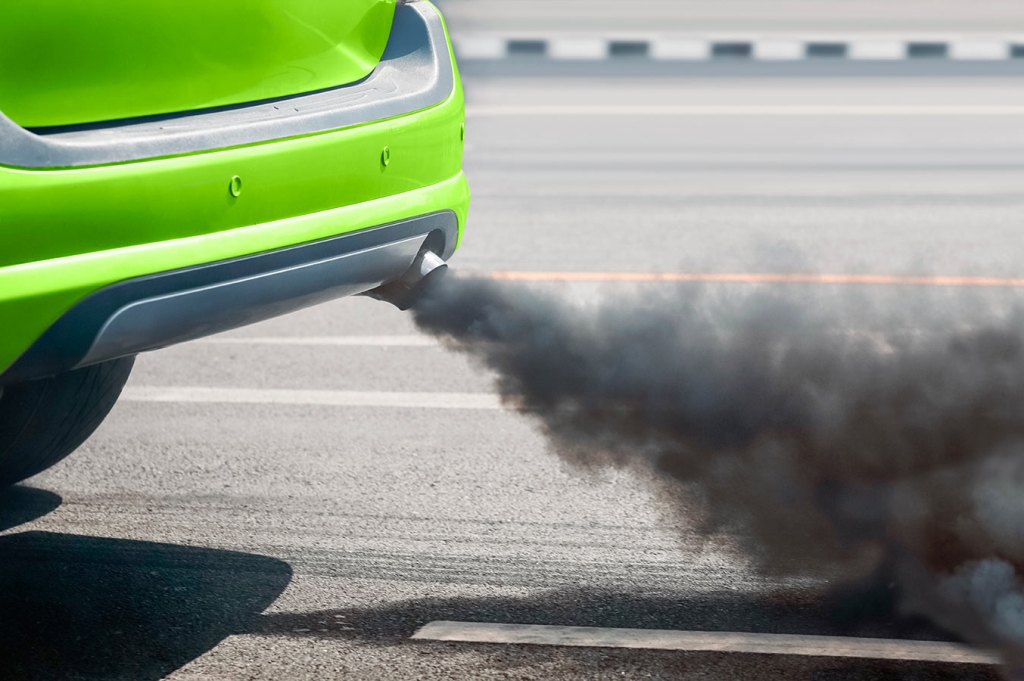
September 22 marks World Car-Free Day, observed in many countries as a reminder of the environmental toll of vehicle emissions. In Tajikistan, experts have long warned that transport is among the main contributors to the country’s air pollution.
According to the World Air Quality Report 2024, Tajikistan ranked 6th among the world’s most polluted countries (out of 138 countries), with an annual average concentration of PM2.5 particles at 46.3 micrograms per cubic meter — nearly nine times higher than the World Health Organization (WHO)’s recommended limit. In 2023, the figure was even higher at 49. Three years earlier, Dushanbe was ranked 4th globally among cities where dirty air has the strongest health impact.
Fine particulate matter (PM2.5) — microscopic particles smaller than 2.5 micrometers — poses the greatest health risk. To put this in perspective: a single human hair averages 70 micrometers thick, meaning 30 PM2.5 particles could fit across its width. These particles penetrate biological barriers, accumulate in the lungs, and do not leave the body, contributing to cardiovascular disease, toxic poisoning, allergies, infections, fibrosis, and cancer.
Air pollution has become a “silent killer” in Central Asia. The World Bank reports that over 65,000 people in the region die prematurely each year from diseases linked to PM2.5. In some cities in Tajikistan and Kyrgyzstan, air pollution-related illness rates are 1.5–2 times higher than in Eastern Europe, exacerbated by poor access to healthcare and delayed diagnoses.
Vehicles at the core of the problem
Emissions come from both mobile sources (cars, trucks, buses, motorcycles, farm machinery) and stationary sources (factories, power plants, greenhouses). Vehicles account for up to 80% of air pollution in Tajikistan, according to environmental experts.
Key pollutants include: carbon monoxide (CO) reducing oxygen transport in the body, causing dizziness, suffocation, and heart complications; hydrocarbons and nitrogen oxides (NOx) contributing to ground-level ozone and smog, worsening respiratory illnesses and raising mortality.
Government measures: limited progress
Authorities have taken some steps to reduce air pollution. Since 2021, passenger transport from regions has been banned from entering Dushanbe. Trucks over six tons may only travel in the city between 9 p.m. and 5 a.m. In 2023, the government banned the import of vehicles manufactured before 2013, citing road safety and pollution reduction. Plans have been announced for bypass roads for heavy trucks, expansion of electric public transport, and closure of a cement plant in Dushanbe.
Yet, many of these measures remain on paper rather than fully implemented.
International recommendations
The World Bank and environmental experts warn that Tajikistan’s current measures are not enough. They recommend: stricter vehicle emissions standards, at least Euro-4; expansion of public transport and integration of electric vehicles; incentives for scrapping old, polluting cars; and real-time air quality monitoring networks, integrated with global platforms.
Without these steps, they argue, Tajikistan’s fight for cleaner air will remain ineffective.
What needs to change
Environmentalists say key priorities include: planting more trees and creating rooftop gardens; promoting low-emission vehicles; shifting industries to gas and electricity while phasing out coal; and expanding solar technologies such as panels, solar stoves, and water heaters.
Expert opinion
Timur Idrisov, senior adviser at the NGO Little Earth, believes that while electric cars could help reduce emissions, the real solution lies in green public transport.
“When we talk about electric cars, we also need to ask: how is the electricity for them produced? How are the batteries disposed of? What infrastructure exists to maintain them?” Idrisov said.
He stressed that the most effective strategy is investing in clean, comfortable, and efficient public transit — along with promoting alternatives such as cycling.
The road ahead
Tajikistan faces a pressing challenge: reduce air pollution without stalling economic growth. While policies to modernize the vehicle fleet and expand electric transport are underway, the country still relies heavily on aging cars, diesel trucks, and weak enforcement of emission standards.
For now, the air in Dushanbe remains among the dirtiest in the world — and until cleaner, greener transport becomes the norm, every breath comes at a cost.
 Руcский
