




Achieving the Sustainable Development Goals (SDGs) will require massive investments in innovation and in infrastructure, including ICTs, to improve cross-border connectivity.
UNECE and ESCAP are supporting the countries of Central Asia in this endeavor.
UNECE Weekly (# 681, October 3-7) reports that UNECE carries out national innovation performance reviews which are a one-stop shop policy advisory service, benchmarking domestic policies against international good practice and proposing tailor-made advice for improvements.
These reviews inform policy priorities for both national authorities and future UNECE capacity building activities. ESCAP is working on the Asia-Pacific Information Superhighway (AP-IS) which is a regional broadband connectivity initiative, stretching geographically from Turkey to Kiribati. AP-IS aims to enhance availability, resilience, reliability and affordability of broadband access, especially among landlocked countries such as those in North and Central Asia.
Key policy decision makers from Azerbaijan, Kazakhstan, the Kyrgyz Republic, ICT stakeholders, and international experts from Belarus, Pakistan, Russia and Ukraine shared lessons learned and good practices on policies to harness the information economy for sustainable development at the 8th session of the Working Group on Knowledge-based Development of the UN Special Program for the Economies of Central Asia (SPECA).
There is a particularly strong link between UNECE’s work on innovation and public-private partnerships and SDG 9 to “Build resilient infrastructure, promote inclusive and sustainable industrialization and foster innovation”. Innovation is therefore seen as both a broad driving force for delivery of all SDGs, as well as a central aspect of SDG 9.
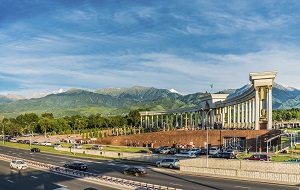
The meeting reportedly led to concrete plans for cooperation in promoting ICT connectivity, innovation and e-resilience. It also reviewed the achievements of the Working Group and its program of work. The regional workshop and 8th session were hosted by the Center for Emergency Situations and Disaster Risk Reduction in Almaty, Kazakhstan, on September 20-22, 2016.


Warm February: how abnormal weather threatens crop yields in Tajikistan
Uzbekistan aims to cut manual labor in cotton harvesting to 30%
Turkish low-cost carrier Pegasus to launch Istanbul-Dushanbe flights
Tajikistan's Beshai Palangon Reserve faces potential water crisis
Private company in Tajikistan to invest $5 Million in post automation
Tajikistan’s anticorruption agency explains the removal of Jaloliddin-Balkh district judge
Joint Statement on the marking of four years since the start of Russia’s full-scale invasion of Ukraine
Tajikistan advances in implementing social entrepreneurship law
Over 500 complaints filed against Kyrgyzstan's GKNB employees after Tashiyev’s resignation
Court sentences school teacher from Levakant to compulsory labor for slapping student
All news
Авторизуйтесь, пожалуйста