




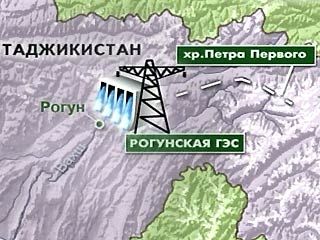
DUSHANBE, January 25, 2013, Asia-Plus -- As part of an ongoing assessment of the proposed Roghun Hydropower Project (Roghun HPP) in Tajikistan, the third information-sharing meetings will take place at the World Bank’s Central Asia Regional Office in Almaty on February 12, 2013. Civil society organizations will be connected by a video-conference between Almaty, Astana, Bishkek, Dushanbe, Kabul, and Tashkent and by audio connection with Ashgabat.
According to the World Bank, the meetings are expected to address various aspects of dam safety and water management. The alternative project designs will also be described.
We will recall that the second information-sharing meetings took place in Almaty on November 6-7, 2012.
The meetings provided an opportunity for riparian governments and civil society representatives to review the building blocks of the Assessment Studies being conducted by two international firms.
On November 6, riparian government representatives from Afghanistan, Kazakhstan, Kyrgyzstan, Tajikistan, and Turkmenistan welcomed the opportunity to have an open and productive discussion at the regional level. Questions focused on potential environmental and downstream impacts, dam safety and the allocation of water resources. During the meeting, the issues of climate change, sediment management, evaporation, and data-sharing were also discussed.
On November 7, more than 45 civil society organizations were connected by a video-conference between Almaty, Astana, Bishkek, Dushanbe, Kabul, and Tashkent and by audio connection with Ashgabat. The participants’ comments and questions focused on the seismic risks of the proposed Roghun project site, the potential effects of climate change on hydrology, the Government of Tajikistan’s plans for future resettlement and related grievance mechanisms, as well as cultural heritage sites.
In response to a request from the Government of Tajikistan, the World Bank is supporting two Assessment Studies of the proposed Roghun HPP: the Techno-Economic Assessment Study (TEAS) and Environmental and Social Impact Assessment (ESIA). To ensure that the Studies address the concerns of government and civil society stakeholders and meet international quality standards, including expectations of transparency, the Bank is facilitating a process of information-sharing and discussion. The Bank has made no financial commitment to support construction of the Roghun HPP.
The World Bank held initial consultations with the governments of Kazakhstan, Kyrgyz Republic, Tajikistan, Turkmenistan, Uzbekistan, and Afghanistan (Riparians) on the Terms of Reference for the Assessment Studies in 2008-2009. The Government of Tajikistan, with support from an International Development Association (IDA) loan, then contracted two consulting firms on an international competitive basis: Coyne & Bellier (TEAS) and Poyry (ESIA). The Bank also established two independent Panels of Experts (PoEs) to perform due diligence and ensure that the Studies conform to international quality standards.

Amir Tour named best domestic tourism company in Tajikistan
Tajikistan’s ambassador urges students studying in Russia to respect local laws and values
Certain batches of NAN baby formula withdrawn in Tajikistan over potential toxin risk
Legendary U.S. investor buys shares on Uzbekistan’s stock exchange
“I don’t need international law”: Trump says his power is limited only by his “own morality”
Construction of the Qalai-Khumb – Vanj highway frozen for second month
Internet nearly completely shut down in Iran amid protests and rial collapse
Earthquake of magnitude 5.3 recorded in GBAO’s Murgab district on January 9
Protests erupt in the U.S. after woman killed during immigration operation
US Embassy in Dushanbe confirms suspension of Green Card lottery program
All news
Авторизуйтесь, пожалуйста