




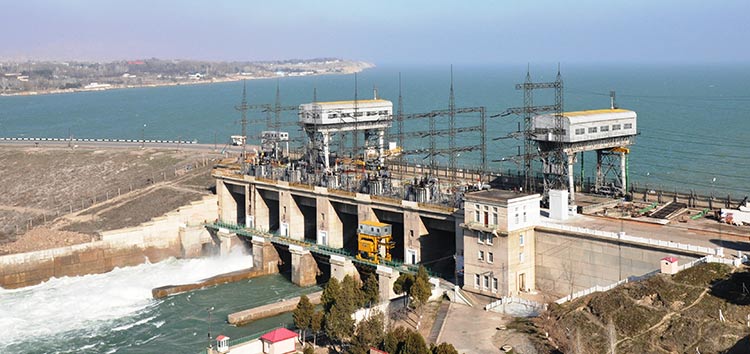
The European Bank for Reconstruction and Development (EBRD) climate resilience project proposal for the modernization of a hydropower plant in Tajikistan was approved for co-financing by the Green Climate Fund (GCF)on April 6.
According to the EBRD News Center, the EBRD and other co-lenders are providing US$ 158 million for the climate-resilient upgrade of Qairoqqum hydropower plant in the Tajik northern Sughd province, with co-financing of US$ 50 million from the GCF.
The modernization of the Qairoqqum hydropower plant is expected to address the energy security needs of 2.4 million people in the northern Sughd region in the face of increasing climatic variability. GCF support will enable best international practices on climate risk management to be introduced to the Tajik hydropower sector.
More reliable and climate-resilient energy generation will address the frequent electricity blackouts which are severely harming the economy of Tajikistan, a country where hydropower sources are responsible for 98 per cent of electricity generation.
Extensive cooperation between the EBRD, the Tajik authorities and international experts involved detailed climatic and hydrological studies, which informed the design of the Qairoqqum project. This led to the selection of turbine, spillway and dam safety monitoring equipment that is designed to cope with the projected increasing variability in climatic conditions in the Syr Darya river basin.
The project will also include technical cooperation on climate resilience capacity building, which will involve improving trans-boundary cooperation on hydropower cascade management. It will build the resilience of this nationally critical infrastructure in the face of changing climatic conditions and the GCF support is critical for achieving this.
The Qairoqqum hydropower project is complemented by a range of other activities by the government of Tajikistan in collaboration with donors to strengthen the country’s energy system. For example, the EBRD’s CLIMADAPT Climate Resilience Financing Facility provides affordable finance for Tajik households, farmers and businesses through the local banking sector and with support from the Climate Investment Funds to access sustainable energy, water and sustainable land management solutions. This includes finance for small-scale renewable energy and household energy efficiency.
The GCF is a unique global initiative responding to climate change by investing in low-emission and climate-resilient development. It was established by 194 governments to limit or reduce greenhouse gas emissions in developing countries and to help adapt vulnerable societies to the impacts of climate change.
The EBRD is a multilateral bank committed to the development of market-oriented economies and the promotion of private and entrepreneurial initiative in more than 30 countries. The Bank is owned by 65 countries, the EU and the EIB. The EBRD’s strategic plan for the countries where it invests for the period 2016-18 has three priorities: strengthening economic resilience, addressing global challenges and supporting regional integration.


From markets to online platforms: how consumer rights are protected in Tajikistan
European investment fund to invest over $200 Million in Tajik new privately-owned airline
Debt trap: how to take a loan in Tajikistan without regretting it
Tajikistan citizen killed by unknown gunmen in Afghanistan’s Kunduz, afghan media outlets report
Kazakhstan approves new Constitution, central election commission says
Iranian footballers who sought asylum in Australia decide to return home
Radisson Collection to enter Tajikistan
Talbak Nazarov — the patriarch of Tajik diplomacy
Central Asia’s water crisis in numbers
Tajikistan national team to compete at Asian Judo Championships in China
All news
Авторизуйтесь, пожалуйста