




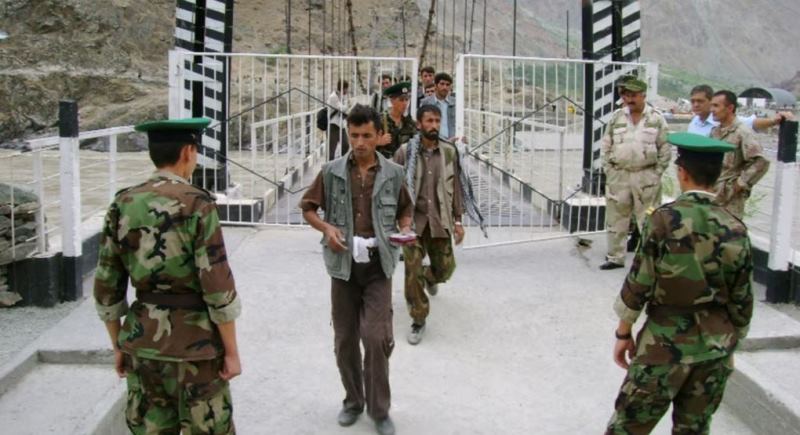
Weeks after deadly cross-border attacks claimed the lives of five Chinese workers near the volatile Afghan-Tajik border, uncertainty continues to cloud the circumstances and motivations behind the incidents — raising concerns over regional security and the future of Chinese investment in Central Asia. Two separate attacks occurred on November 26 and 30 in the border areas of Tajikistan. Both incidents reportedly involved militants crossing over from Afghanistan. Five Chinese workers were killed and five others injured. No group has claimed responsibility, and officials in both Afghanistan and Tajikistan have offered limited and sometimes conflicting explanations. Tajik authorities blamed drug traffickers and criminal groups, while the Taliban said two suspects were arrested but provided no details about their identity or nationality. Chinese diplomats in Dushanbe and Kabul swiftly demanded assurances of safety for Chinese nationals. Both the Taliban and Tajik governments promised increased border security, amid fears that further instability could derail Chinese business interests in the region — especially in mining and infrastructure projects.
An article by Mustafa Sarwar, a senior news editor for RFE/RL's Radio Azadi, says relations with China are crucial for both countries. China is Tajikistan’s largest trading partner and foreign investor, holding over half of Dushanbe’s foreign debt. Meanwhile, the Taliban, isolated under international sanctions, has sought Chinese capital since regaining power in 2021.
“These incidents raise serious concerns about the ability of both the Taliban and Tajikistan to maintain control and protect foreign investments,” said Edward Lemon, a Central Asia expert at Texas A&M University.
While tensions along the Afghan-Tajik border are not new, recent years have seen increasing Chinese involvement in resource extraction projects in the region — especially along the Panj River, a known drug smuggling route and a hotspot for sporadic clashes between Taliban fighters and Tajik border guards.
A week prior to the first attack, a dispute reportedly broke out between Afghan and Tajik gold miners over attempts to divert the Panj River for mining operations — potentially escalating local tensions. The Shohin SM mining company, where the Chinese workers were employed, is a joint Tajik-Chinese venture active in the area since 2023.
Amid speculation over the perpetrators, multiple militant and extremist groups have been floated as possible culprits, including Islamic State–Khorasan Province (IS-K), the East Turkestan Islamic Movement (ETIM), and Jamaat Ansarullah — a Tajik jihadist group based in Afghanistan.
Lucas Webber, a senior analyst with Tech Against Terrorism, noted that while drug traffickers were initially blamed, their typical focus on secrecy casts doubt on their involvement.
“High-profile attacks don’t align with the operating methods of smugglers, who avoid drawing attention,” he told RFE/RL. “If the target was revenge on Tajik security forces, Chinese workers would not be the logical choice.”
He believes Jamaat Ansarullah presents a more plausible theory. “They fit both the geography and political logic,” Webber said, suggesting the group may have wanted to undermine both the Tajik government and Taliban-China ties without publicly claiming responsibility.
Another possibility, he added, is that local Taliban units or rogue factions carried out the attacks without official sanction — an unsettling prospect for Chinese stakeholders seeking reliable state protection.
In response to the attacks, Chinese embassies in Dushanbe and Kabul urged nationals to leave border regions, and foreign ministers from Tajikistan and the Taliban discussed security cooperation in early December. The Taliban has also indicated plans to form a dedicated military unit to secure mining areas from armed groups operating beyond their control.
At a UN Security Council meeting on December 10, China’s ambassador Fu Cong called on the Taliban to thoroughly investigate the killings and crack down on extremist activity near its border with Tajikistan.
Yet without a clear claim of responsibility, regional authorities remain in a difficult position.
“This ambiguity complicates how Tajikistan, China, and the Taliban can respond,” Webber warned. “Any premature accusation risks political fallout, while continued uncertainty exposes more Chinese workers to danger.”
As the investigation drags on, the attacks threaten to destabilize a region already grappling with criminal networks, militant groups, and a fragile geopolitical balance — with China’s growing footprint now at the center of it all.


186 facilities in Tajikistan suspended in 2025 for sanitary violations
Tajikistan’s debt web: who holds the strings?
Amir Tour named best domestic tourism company in Tajikistan
Tajikistan’s ambassador urges students studying in Russia to respect local laws and values
Certain batches of NAN baby formula withdrawn in Tajikistan over potential toxin risk
Legendary U.S. investor buys shares on Uzbekistan’s stock exchange
“I don’t need international law”: Trump says his power is limited only by his “own morality”
Construction of the Qalai-Khumb – Vanj highway frozen for second month
Internet nearly completely shut down in Iran amid protests and rial collapse
Earthquake of magnitude 5.3 recorded in GBAO’s Murgab district on January 9
All news
Авторизуйтесь, пожалуйста