




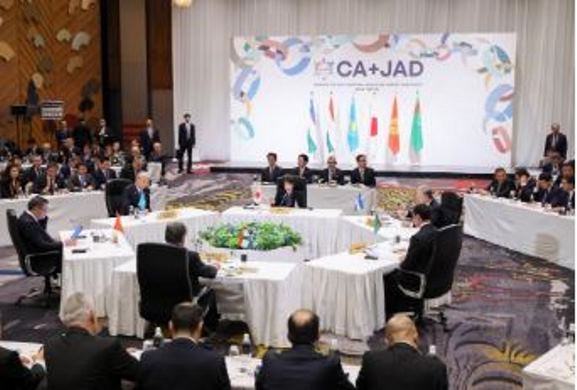
In a historic milestone, the inaugural leaders-level Summit of the "Central Asia plus Japan" Dialogue (CA+JAD) was held in Tokyo on December 20, chaired by Japanese Prime Minister Takaichi Sanae. The high-level meeting brought together the Presidents of the five Central Asian nations — Kazakhstan, Kyrgyzstan, Tajikistan, Turkmenistan, and Uzbekistan — as well as ministers from each country.
According to Japan’s MFA, Prime Minister Takaichi opened the summit by noting the growing prominence of Central Asia on the global stage, especially amid evolving geopolitical dynamics over the past two decades. She emphasized the region’s strategic importance, citing its position at the crossroads of Europe and Asia, its vast energy and mineral resources, and its potential for economic growth driven by a rising population.
In response, Central Asian leaders expressed their appreciation for Japan’s longstanding commitment to fostering regional integration and welcomed the opportunity to elevate cooperation through this first-ever summit meeting.
A key outcome of the summit was the launch of the “CA+JAD Tokyo Initiative,” a comprehensive framework aimed at accelerating industrial advancement and diversification across Central Asia while strengthening bilateral and multilateral ties with Japan. The initiative will focus on three newly prioritized areas of cooperation: Green and Resilience; Connectivity; and Human Resource Development.
The Central Asian countries reportedly welcomed the new initiative and voiced their readiness to deepen cooperation with Japan across these critical sectors. Specific areas of interest include energy and resource development — especially in critical minerals — climate change mitigation, renewable energy transition, disaster risk reduction, improved logistics and transport infrastructure, capacity building, and health and medical services.
The summit concluded with the adoption of the Tokyo Declaration of the CA+JAD Summit, reaffirming the shared commitment to peace, prosperity, and sustainable development.
To mark the occasion, more than 150 agreements and documents were signed between public and private sector stakeholders, signaling a strong and broad-based commitment to actionable partnerships across the region.


Ozoda Rahmon provides financial aid to mother of Tajik boy killed in school xenophobic attack in Russia
What awaits migrants in Russia in 2026: new rules and restrictions introduced
Multiple explosions rock Venezuelan capital Caracas
Two traffic police officers killed in avalanche in Varzob district
Muhsin Muhammadiyev passed away – a football icon and symbol of Tajik sport
Happy New Year, friends!
The horse spirit of Tajikistan: from ancient bloodlines to modern champions
International education in Central Asia: how UCA opens the door to a global career
EcoCars: how a company with Tajik roots became one of China’s first official EV exporters
Barqi Tojik promises uninterrupted power supply during New Year holidays
All news
Авторизуйтесь, пожалуйста