




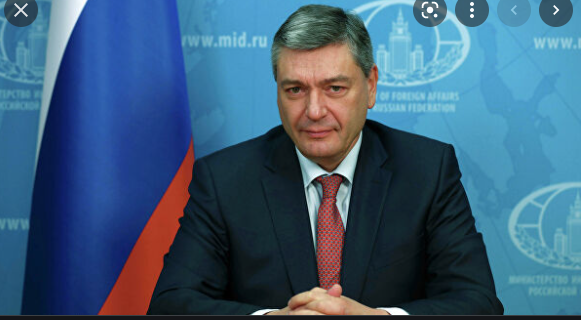
“Russia is ready to share its experience of border demarcation with Dushanbe and Bishkek. It is rich with us. Especially with their common neighbor – Kazakhstan,” the Russian Deputy Foreign Minister Andrey Rudenko told TASS in an interview on February 10.
Rudenko emphasized that the situation along the Kyrgyz-Tajik border in the Ferghana Valley remain volatile, which causes Russia the most serious concern.
"We consistently stand for the resolution of all disputes arising there exclusively by peaceful means: strict observance of ceasefire agreements; withdrawal of troops and military equipment; prevention of inciting ethnic enmity, including in the media,” he added.
According to Rudenko, the root cause is obvious. "Until the problem of delimitation and demarcation of the border is solved, clash recurrences cannot be ruled out. Non-delineated borders carry with them also another threat – penetration of radical extremist groups, which recruit into their ranks the socially vulnerable population,” Rudenko said.
Tajikistan and Kyrgyzstan have not yet resolved the border delineation problem. Many border areas in Central Asia have been disputed since the collapse of the Soviet Union in 1991. The situation is particularly complicated near the numerous exclaves in the Fergana Valley, where the borders of Tajikistan, Uzbekistan, and Kyrgyzstan meet.
The border of Kyrgyzstan and Tajikistan has been the scene of unrest repeatedly since the collapse of the former Soviet Union.
It has been difficult to demarcate the Kyrgyz-Tajik border because over the course of some 100 years Soviet mapmakers drew and redrew the Kyrgyz-Tajik border, incorporating land that had traditionally belonged to one people in the territory of the other Soviet republic.
Exclaves appeared and temporary land use agreements were signed.
All of this survived the collapse of the Soviet Union and people in Kyrgyzstan and Tajikistan have various Soviet-era maps they use to justify their claim to specific areas along the border.
Border talks between Tajikistan and Kyrgyzstan began in 2002. Only slightly more than half of the 970 kilometers of border shared by the two countries has been demarcated despite decades of attempts to bring the matter to a close. The border delineation problem has led to conflicts between rival ethnic communities.


“We want to make jiu-jitsu a national sport”: BJJ legend Rafael Hubert visits Dushanbe
Number of Tajik students studying in Uzbekistan more than doubles in 2025
Untapped potential of the past year: what is Tajikistan missing?
Modernization of Qayroqqum hydropower plant fully completed
President dismisses heads of nine cities and districts
Social grievances or foreign interference? Protests in Iran and the authorities’ response
Tajikistan introduces online verification for marital status certificates
Drone operator training program launched in Tajikistan
Kish Island remains top travel destination for Tajik tourists
Tajik woman detained on suspicion of causing death of Russian blogger in botched cosmetic procedure
All news
Авторизуйтесь, пожалуйста