




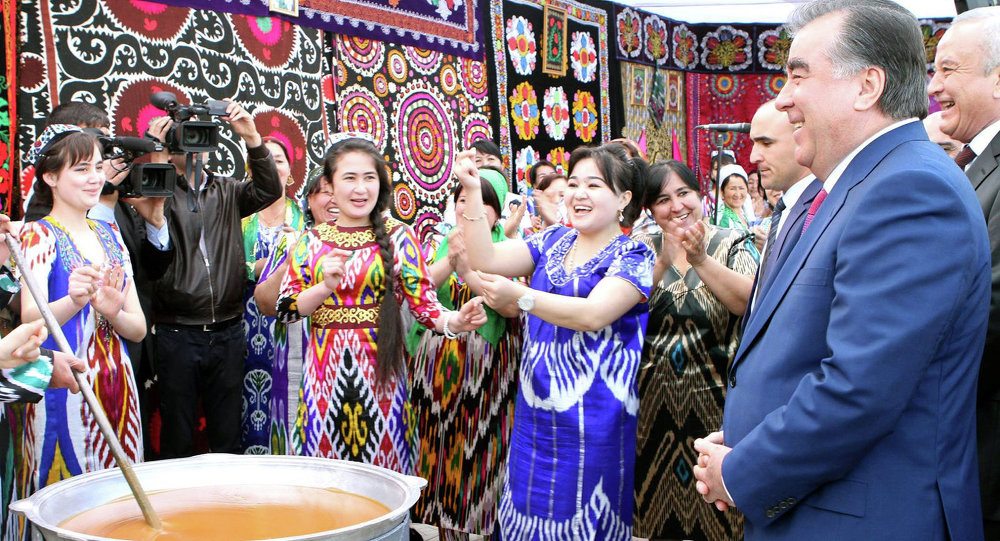
Staying on the festive theme, the World Heritage Committee has enshrined the new year’s celebrations of 12 countries that fall on the March 21 vernal equinox and known as Nowruz in Iran and Navrouz in Tajikistan.
Navrouz, which literary means New Day in Persian, Dari and Tajik languages, is the traditional Iranian new year holiday, celebrated by Iranian and many other peoples. It marks the first day of spring and is celebrated on the day of the astronomical vernal equinox (the start of spring in the northern hemisphere), which usually occurs on March 21 or the previous/following day depending on where it is observed. Today, the festival of Navrouz is celebrated in many countries, including Iran, Afghanistan, Tajikistan, as well as Azerbaijan, Kyrgyzstan, Kazakhstan, Turkmenistan, Uzbekistan. Many peoples in West and South Asia, Northeast China, the Crimea, as well as Albania, Bosnia, Kosovo and Macedonia also celebrate this holiday. In September 2009, the UN's cultural agency, UNESCO, included Navrouz in its list of the Intangible Cultural Heritage of Humanity. On February 23, 2010, the United Nations General Assembly recognized the International Day of Navrouz.
On the first year of the 2030 Agenda for Sustainable Development, the United Nations on March 21, 2016 celebrated Nowruz, as an occasion to strengthen the international community's resolve to leave no one behind in the collective journey to a better future.
On November 30, the World Heritage Committee also added Cuban rumba and Belgian beer to list of world’s ‘intangible’ heritage.
UNESCO gave the nod to the rumba, which it said evokes “grace, sensuality and joy,” while it said “making and appreciating beer is part of the living heritage... throughout Belgium,” which has more than 1,500 types.
UNESCO established its lists of Intangible Cultural Heritage with the aim of ensuring the better protection of important intangible cultural heritages worldwide and the awareness of their significance. Through a compendium of the different oral and intangible treasures of humankind worldwide, the program aims to draw attention to the importance of safeguarding intangible heritage, which UNESCO has identified as an essential component and as a repository of cultural diversity and of creative expression.
The list was established in 2008 when the 2003 Convention for the Safeguarding of the Intangible Cultural Heritage took effect.


Job market in Tajikistan: Somon.tj identifies most in-demand professions and market trends
Russian lawmaker proposes migrants should receive benefits only after 20 years of residence in Russia
Tajikistan in 2025: economic growth, inflation, and foreign trade
Police in Dushanbe urges entrepreneurs to avoid unjustified price increases during Ramadan
"No criminal cases have been initiated": Tajikistan has not punished citizens for participation in the war in Ukraine
Tajik, Kazakh railway companies agree to expand cooperation
Tajikistan reduces funeral benefit payments: government explains the reasons
Iran’s TPO head visits Tajikistan to strengthen industrial and commercial ties
Tajikistan and Iran decide to expand trade and economic cooperation
Taliban’s new criminal procedure code sparks criticism over discrimination and class division
All news
Авторизуйтесь, пожалуйста