




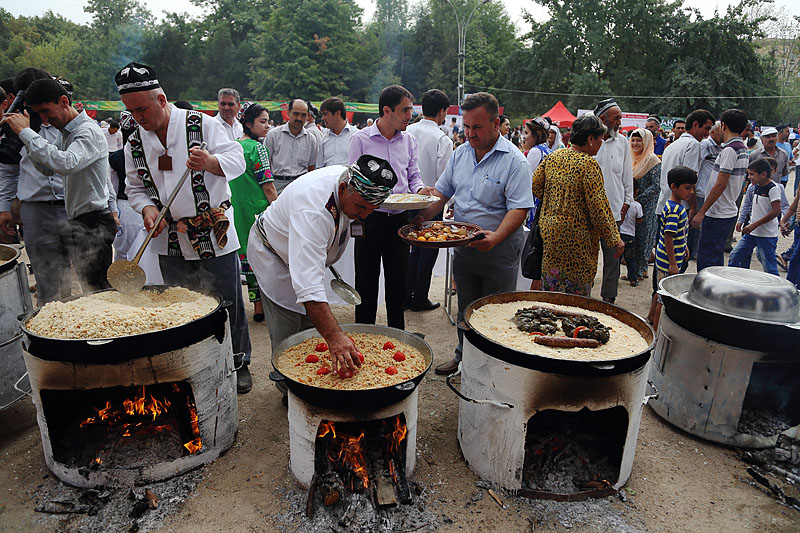
Oshi Palav, a traditional meal in Tajikistan, has been inscribed in 2016 (11.COM) on the Representative List of the Intangible Cultural Heritage of Humanity.
According to UNESCO, Oshi palav (pilaf) is a traditional dish of communities in Tajikistan recognized as a part of their cultural heritage.
Otherwise known as the ‘King of meals’, it is based on a recipe using vegetables, rice, meat and spices but up to 200 varieties of the dish exist. Considered an inclusive practice that aims to bring people of different backgrounds together, Oshi palav is prepared to be enjoyed at regular mealtimes, as well as social gatherings, celebrations and rituals.
The importance of the dish to communities in Tajikistan is indicative in sayings such as “No Osh, no acquaintance” or “If you have eaten Osh from somebody, you must respect them for 40 years”. Groups of men or women prepare the dish either in their homes or at teahouses while socializing or playing music and singing.
Knowledge and skills associated with the practice is transmitted on an intergenerational basis in families, in addition to cooking schools from master to apprentice. Once an apprentice masters Oshi palav, the apprentice hosts a dinner for the trainer and guests during which the trainer receives a skull-cap and traditional dress while the apprentice receives a skimmer (a tool for cooking Oshi palav) symbolizing the apprentice’s independence.


Asia-Plus launches special project on animal protection
Man detained in Dushanbe on suspicion of illegal religious teaching and child abuse
Prosecutor-general confirms dismissal of Bouston prosecutor after restaurant incident
Tajik authorities seek removal of EU sanctions on its three banks
Tajikistan to allocate 100 hectares for Paulownia plantations in 2026
Victims’ lawyers seek life sentences in Crocus terror attack case
OTS softens rhetoric on Tajikistan after Kyrgyz border deal
Tajik brand to debut at New York Fashion Week
Tradition, fashion, or financial hardship: why women become second wives — and men take them — in Tajikistan
More than 2,600 individuals wanted by Tajik law enforcement authorities detained in 2025
All news
Авторизуйтесь, пожалуйста