




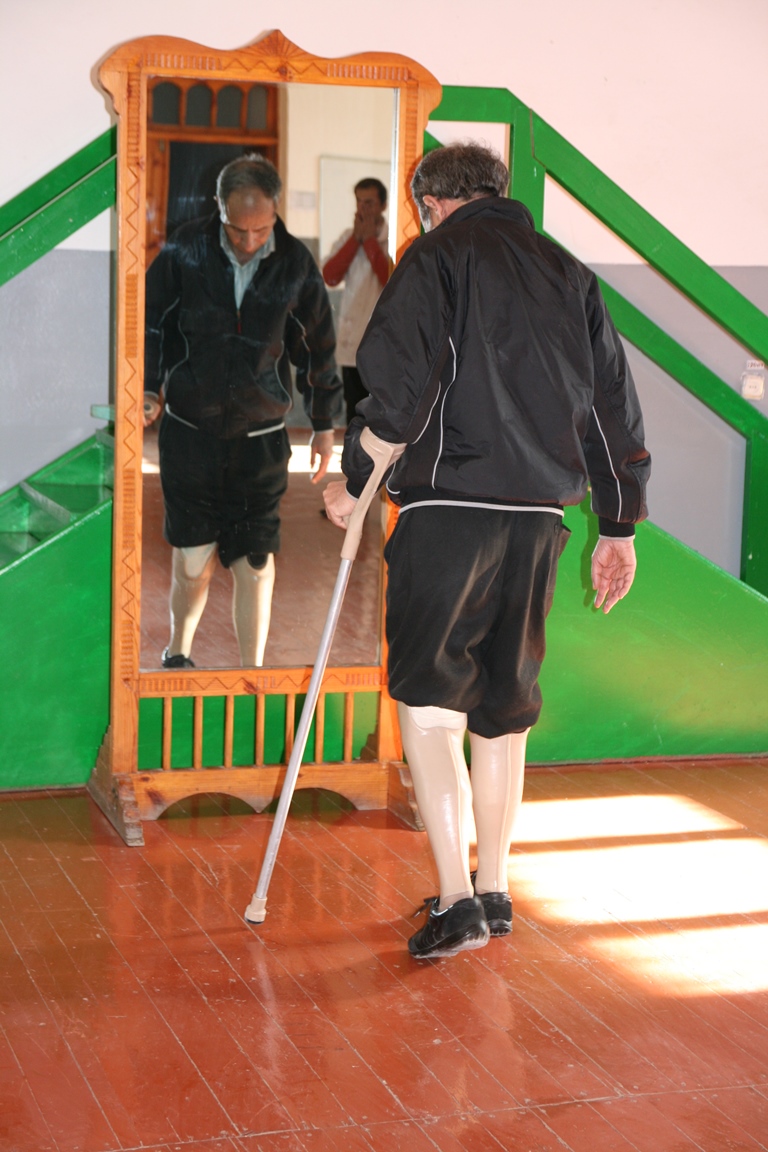
The ICRC Mission in Tajikistan says a ceremony of opening of orthopedic plant is taking place in Khujand, the capital of Sughd province, today.
The ICRC Special Fund for Disabled (SFD) was created by the International Committee of the Red Cross (ICRC) in 1983 that was later converted into independent foundation with the mission to ensure the continuity of the former ICRC physical rehabilitation programs.
The Ministry of Health and Social Protection of the Population of Tajikistan (MoHSPP) is implementing the National Program on Rehabilitation of Persons with Disabilities for 2017-2020 with the support of the SFD in Tajikistan. The program aims to create enabling environment with equal opportunities for all through improved health, rehabilitation and social protection for persons with disabilities.
According to WHO/ISPO more than 30,000 people need physical rehabilitation services. Type of disabilities are numerous and includes a number of persons in need of prostheses or orthosis services; notably landmine/unexploded ordnance survivors who have been injured along the Tajikistan-Uzbekistan border where accidents continue to occur; patient with cerebral palsy; but also children who have been affected by the acute outbreak of poliomyelitis that took place in 2010 in the southwest and central regions of Tajikistan.
The State Enterprise Orthopedic Plants (SEOP) in Dushanbe and its branches in Khujand, Kulob and Khorog are the only facilities providing assistive devices services in Tajikistan.
In 1998, the ICRC signed its first cooperation agreement with the MoHSPP and the Red Crescent Society of Tajikistan to re-open the SEOP and later on re-activate its 3 branches although the capacity of the latter remained low. The rehabilitation of the Khujand branch of the SEOP was done by the ICRC Special Fund for Disabled and Japanese Embassy.
Today, Khujand branch of SEOP manufactures not only the orthopedic shoes but also orthosis and prostheses for the population.

UCA-SPCE has to suspend the programs of its learning centers in Tajikistan
Tajikistan sets hunting quotas for Red Book species for 2026–2027
This year, Eid al-Fitr to be celebrated in Tajikistan on March 20
Asia-Plus launches chatbot on digital safety
Arvand mobile app: security, convenience, and full financial control
Two children removed from their parents in Dushanbe over begging
Tajik nationals convicted in Crocus City Hall attack case appeal verdict
US allies decline Trump’s call to send warships to the Strait of Hormuz
Average salary in Tajikistan rises by 17.3% year-on-year
Tajikistan begins implementing CIS agreement on locust control
All news
Авторизуйтесь, пожалуйста