




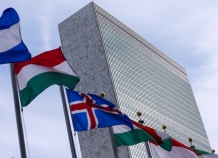
DUSHANBE, April 13, 2016, Asia-Plus – The Associated Press ( AP ) reports the United Nations yesterday took a historic step to open up the usually secret process of selecting the next secretary-general, giving all countries the chance to question candidates on such issues as how they would resist pressure from powerful nations, tackle sex abuse by U.N. peacekeepers, and improve efforts to achieve peace.
Montenegro''s Foreign Minister Igor Luksic was reportedly the first of eight candidates to face members of the U.N. General Assembly (UNGA), citing his small Balkan nation''s multiethnic and multicultural diversity as well as his experience as a former prime minister and defense minister in seeking the U.N.''s top diplomatic post. UNESCO Director-General Irina Bokova and former U.N. refugee chief Antonio Guterres followed.
General Assembly President Mogens Lykketoft called it “a historic moment ... without precedent at the United Nations.”
Under the U.N. Charter, the secretary-general is chosen by the 193-member General Assembly on the recommendation of the 15-member Security Council.
In practice, this has meant that the council''s five permanent members — the U.S., Russia, China, Britain and France — have veto power over the candidates. That will not change in deciding whom to recommend succeeding Ban Ki-moon, whose second five-year term ends on December 31.
But Lykketoft told the assembly Tuesday that he views the question-and-answer sessions, which will continue through Thursday, “as a potential game-changer for the United Nations.”
By tradition, the job of secretary-general has rotated among regions and Asia, Africa, Latin America and Europe have all held the top U.N. post. AP says East European nations, including Russia, argue that they have never had a secretary-general and it is their turn. There has also never been a woman secretary-general and a group of 56 nations are campaigning for the first female U.N. chief.
There are currently four women and four men who have thrown their hats in the ring — six from Eastern Europe, one from Western Europe and one from the Asia-Pacific region, according to AP .
In addition to the three candidates questioned Wednesday, they are: former Macedonian Foreign Minister Srgjan Kerim; former Croatian Foreign Minister Vesna Pucic; former Slovenian President Danilo Turk; former Moldovan Foreign Minister Natalia Gherman; and former New Zealand Prime Minister Helen Clark, who heads the U.N. Development Program.
While Tuesday''s session was under way, another candidate announced his entry into the race: former Serbian foreign minister and General Assembly president Vuk Jeremic said in Belgrade that the government will be nominating him.


Tajikistan uses microwave ablation to remove liver tumors for the first time
Tajikistan: Starlink equipment registration now available on official website
How Kyrgyzstan’s No. 2 figure nearly became No. 1
Soldier dies during shooting exercises in Kazakhstan: prosecutor-general takes control of the case
A first of its kind: sales start at the exclusive Rome Residence Complex in Dushanbe
New digital advertising platform Alon.tj launched in Tajikistan
Barqi Tojik: in Ramadan, electricity supply in Tajikistan will be 17 hours a day
Tajikistan’s President meets with Uzbekistan’s PM: strengthening strategic partnership
Tajikistan and Uzbekistan agree to increase mutual trade to $2 billion
Russia to allow communication shutdowns on FSB’s request
All news