




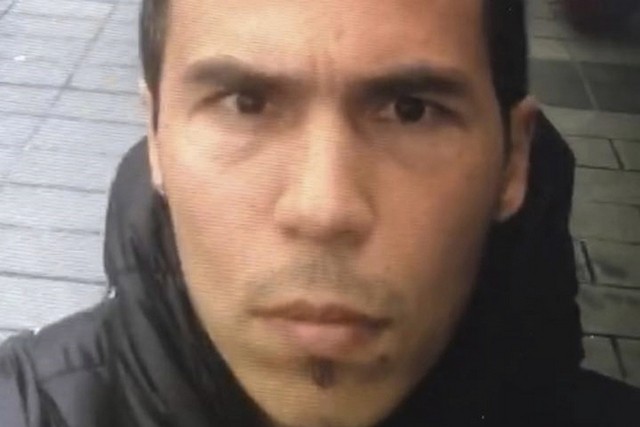
The man who shot dead 39 people at an Istanbul nightclub on New Year’s Eve has been identified as an Uzbek militant who belongs to the Islamic State of Iraq and the Levant (ISIL) terrorist group.
AFP (Agence France-Presse) and Associated Press report the killer has the code name Abu Mohammed Khorasani within the extremist group.
There had been confusion over the identity of the attacker — who remains on the run — with reports initially suggesting that he was from Kyrgyzstan, and others that he was a Uighur, the Turkic ethnic group from the restive Xinjiang region of southwest China.
But intelligence services and anti-terror police in Istanbul have identified the man as a 34-year-old from Uzbekistan who is member of a Central Asian ISIL cell.
The killer slipped into the night after killing 27 foreigners and 12 Turkish nationals at the Reina nightclub in Istanbul just 75 minutes into 2017.
Survivors, who hid on top of a large industrial freezer, said the gunman entered the nightclub kitchen after the killings, and spent 30 minutes wiping fingerprints from his AK-47 assault rifle before leaving it behind, along with his coat. He changed clothes, put on a Santa Claus hat and blended into the panicked crowd – smearing himself with blood on his chest, and limping.
Despite an intense manhunt, he remains on the run, with some reports saying he is believed to be still in Istanbul. Security has been tightened around the city and at border crossings and airports to prevent him from fleeing Turkey.
Turkish police released images of the attacker, including a chilling silent video taken in central Istanbul with a selfie stick.
ISIL militants from Central Asia, including Kyrgyzstan and Uzbekistan, as well as from the Russian regions of Dagestan and Chechnya are believed to have played a key role in the triple suicide bombings and gun attack at Attaturk airport in Istanbul in June.
ISIL said one of its terrorists carried out the Istanbul nightclub attack, the first time it has ever clearly admitted to a major attack in the country despite being blamed for several strikes including the airport bombings.

UCA-SPCE has to suspend the programs of its learning centers in Tajikistan
Tajikistan sets hunting quotas for Red Book species for 2026–2027
This year, Eid al-Fitr to be celebrated in Tajikistan on March 20
Asia-Plus launches chatbot on digital safety
Arvand mobile app: security, convenience, and full financial control
Two children removed from their parents in Dushanbe over begging
Tajik nationals convicted in Crocus City Hall attack case appeal verdict
US allies decline Trump’s call to send warships to the Strait of Hormuz
Average salary in Tajikistan rises by 17.3% year-on-year
Tajikistan begins implementing CIS agreement on locust control
All news
Авторизуйтесь, пожалуйста