





Russian President Vladimir Putin has proposed considering the abolition of the patent system for migrant workers. RBC says the suggestion came during a meeting with leaders of parliamentary factions on September 18, where the President emphasized the sensitivity of migration issues for the Russian public.
“The abolition of the patent system is something we should think about. Today it is widely used. I’m not ruling anything out,” Putin said, acknowledging that migration remains a “very delicate issue” for Russian society.
He added that both federal and regional authorities must actively address migration concerns rather than ignore them. His comments come just weeks ahead of his scheduled state visit to Tajikistan on October 9, where migration is expected to be a key topic on the agenda.
What is the patent system?
Russia’s patent system applies to migrant workers from visa-free countries, primarily in Central Asia, including Tajikistan. A patent is a work permit that must be obtained within 30 days of entering the country, and its validity depends on monthly pre-paid income tax contributions (NDFL).
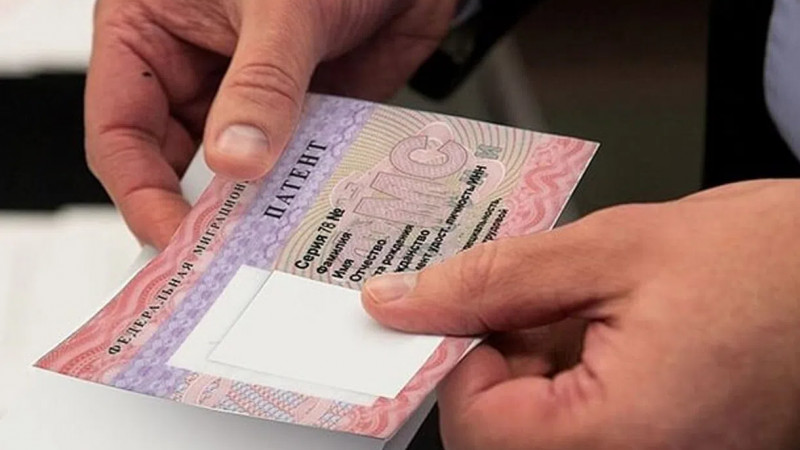
For example, starting January 1, 2025, the monthly patent payment in Moscow will be 8,900 rubles. The patent is valid for up to one year but is restricted to specific regions and employment sectors.
Recent Policy Changes on Migration
In recent months, Russia has introduced several changes to its migration policies:
- Stricter Russian Language Exams: In July 2025, the language test required for patents and residency was made more rigorous, including more listening tasks and new minimum passing scores.
- Exemption for Quota-Based Workers: In May, the government proposed, and in July, the Federation Council approved, a bill exempting quota-based foreign workers from language, history, and law exams.
- Temporary Patent-Free Work in New Regions: President Putin also signed a decree extending the right to work without a patent until December 31, 2025, in the newly incorporated regions of Donetsk, Luhansk, Zaporizhzhia, and Kherson.
Russia–Tajikistan interior ministers discuss migration
Coinciding with Putin’s remarks, on September 18 in Lianyungang, China, Russian Interior Minister Vladimir Kolokoltsev met with his Tajik counterpart Ramazon Rahimzoda on the sidelines of the Global Forum on Public Security. The two discussed bilateral cooperation on transnational crime, terrorism, drug trafficking, and the legal status of Tajik migrants working in Russia.

The Tajik Interior Ministry reported that both sides stressed the need to improve living and legal conditions for migrants, especially amid growing public scrutiny in Russia.
Migration's economic impact
According to Russia’s Interior Ministry, 63 billion rubles (approx. US$670 million) were collected from January to May 2025 in income taxes linked to migrant work patents — a 35% increase compared to the same period in 2024. Last year, the total reached 124 billion rubles (around US$1.6 billion).
These tax payments, made in advance by migrants, directly support regional budgets across the country. The latest data estimates that 3 million foreign workers are currently employed in Russia, with:
- 800,000 in construction
- 350,000 in retail and manufacturing
- 193,000 in logistics and storage
- 63,000 in agriculture
In 2024, 6.3 million foreigners entered Russia — returning to pre-pandemic levels. Approximately half of them came for employment, with the highest share arriving from:
- Uzbekistan – 23.3%
- Tajikistan – 16.7%
- Kyrgyzstan – 10.4%
 Руcский
