




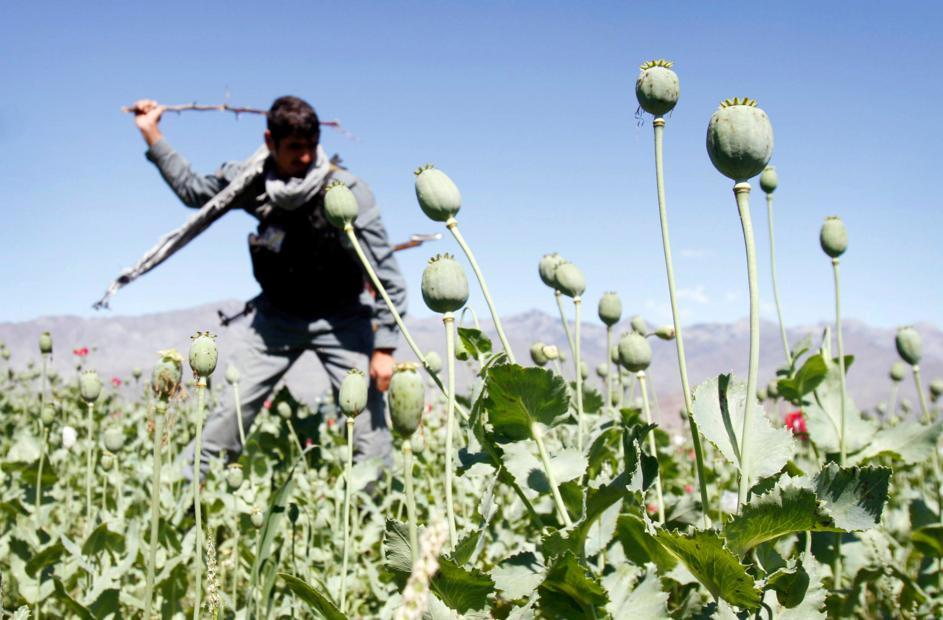
Fergana news agency reports that The Washington Post has revealed details of a previously undisclosed CIA operation aimed at disrupting Afghanistan’s heroin industry, which for years served as a major source of funding for the Taliban and supplied a significant share of the global opiate market.
According to the investigation, the CIA—under the administration of President George W. Bush—reportedly launched a covert program in the early 2000s that involved aerially dispersing specially selected poppy seeds over Afghan fields. These seeds, bred through natural selection, produced plants with extremely low levels of opium alkaloids—making them unsuitable for heroin production.
The operation, run by the CIA’s Crime and Narcotics Center, began in the fall of 2004 and continued intermittently until 2015. The idea was for the genetically inferior strains to gradually crossbreed with local varieties and eventually become dominant, thus undermining the opium supply chain.
British C-130 aircraft also participated in the night-time missions, dropping seeds over the key poppy-growing provinces of Nangarhar and Helmand.
Despite the program’s ambitious goal, it ultimately failed. Sources familiar with the operation cited multiple reasons for its collapse, including bureaucratic infighting in Washington, strategic disagreements with allies, inconsistent support from Afghan President Hamid Karzai’s administration, and the deep-rooted nature of poppy farming in rural Afghanistan.
Resistance from the Pentagon also hindered the project. U.S. military leaders reportedly viewed the initiative as a distraction from the core mission of counterterrorism and defeating the Taliban.
Most details of the operation remain classified, including its budget, the number of missions flown, and any measurable outcomes.
A 2018 report from the U.S. Special Inspector General for Afghanistan Reconstruction (SIGAR)—compiled without knowledge of the secret program—concluded that none of the anti-narcotics efforts led by the U.S. and its partners had achieved a lasting reduction in poppy cultivation or opium production.
According to the UN Office on Drugs and Crime (UNODC), after the CIA’s program ended, Afghanistan’s opium economy accounted for 9 to 14% of the country’s GDP.
 Руcский
