





Uzbek boxer Lazizbek Mullazhonov, who defeated Tajikistan’s Davlat Boltayev in the semifinals of the 2024 Paris Olympics and went on to win gold, has tested positive for a banned substance. The International Testing Agency (ITA), which oversees anti-doping efforts under World Boxing, confirmed the violation in an official statement.
According to the ITA, Mullazhonov's out-of-competition sample collected on June 11, 2025, tested positive for methasterone—a prohibited anabolic androgenic steroid. The substance enhances muscle growth, strength, and endurance, and is banned by the World Anti-Doping Agency (WADA) both in and out of competition.
The boxer has been formally notified of the positive result and has the right to request testing of the B sample. However, the ITA noted that even if he waives the second test, the violation will still be considered confirmed.
If the B sample also returns positive for methasterone, Mullazhonov faces disciplinary action including disqualification and annulment of his competition results.
Mullazhonov's victory had halted Davlat Boltayev’s Olympic journey in the 92 kg weight class semifinals. The Uzbek fighter then went on to defeat Azerbaijan’s Loren Alfonso in the final, securing the gold. Now, with the doping scandal unfolding, serious questions arise about whether those results will be revised.
The case carries significant weight for Tajik boxing. Boltayev lost his chance at the final to an athlete whose results are now under scrutiny. Should Mullazhonov be officially disqualified, the boxing community will expect his victories to be annulled and tournament results reviewed.

What happens if Mullazhonov is officially stripped of his gold medal?
In Olympic and amateur boxing, there are typically two bronze medalists—both semifinal losers. The final bout determines the gold and silver. If the gold medalist is disqualified, the following outcomes are possible:
- The silver medal (originally awarded to Loren Alfonso) may be upgraded to gold.
- The bronze medal could theoretically be upgraded to silver—but only for the semifinalist who lost to the disqualified athlete.
- The two bronze medals generally remain unchanged unless the tournament's rules or the governing body decide otherwise.
How might this affect Davlat Boltayev?
Two main scenarios could unfold:
- Medal Upgrade: If the semifinal bout between Boltayev and Mullazhonov is officially voided, Boltayev could be recognized as a finalist, effectively moving from bronze to silver. Alfonso would then receive gold.
- No Change in Medals: Sometimes, only the disqualified athlete is affected—Mullazhonov’s results are erased, but medals aren’t redistributed. In this case, Boltayev would retain his bronze medal.
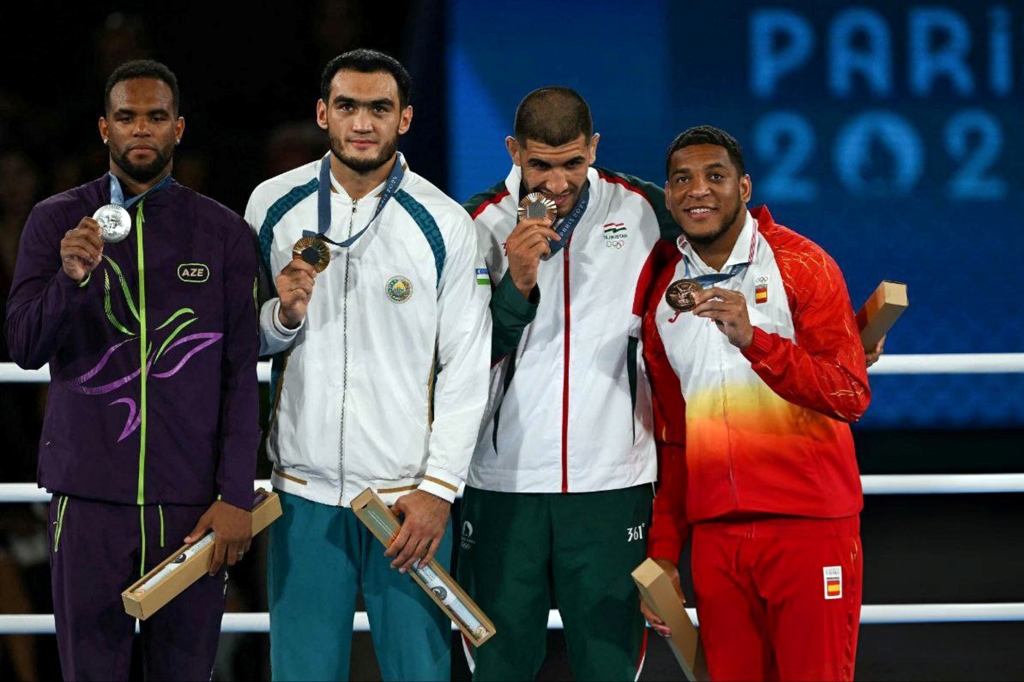
Factors that influence the final decision include:
- The rules of the specific tournament (Olympic, continental, or world-level events).
- WADA and ITA regulations.
- Legal interpretations: whether the voided bout is considered "non-existent" or a "loss without changing result."
Historical Precedents
In similar cases across weightlifting and wrestling, medals are often reassigned—especially if the doping violation is confirmed before the next qualification phase. At the Olympic and world levels, WADA and the respective federations generally elevate all other medalists accordingly.
If Mullazhonov’s disqualification is confirmed, Davlat Boltayev stands a strong chance of receiving a silver medal. However, the final outcome depends on decisions by the governing boxing body, tournament regulations, and the ITA/WADA verdict. Regardless, his semifinal bout may be ruled invalid—a move that could impact his global ranking and future Olympic qualifications.
 Руcский