




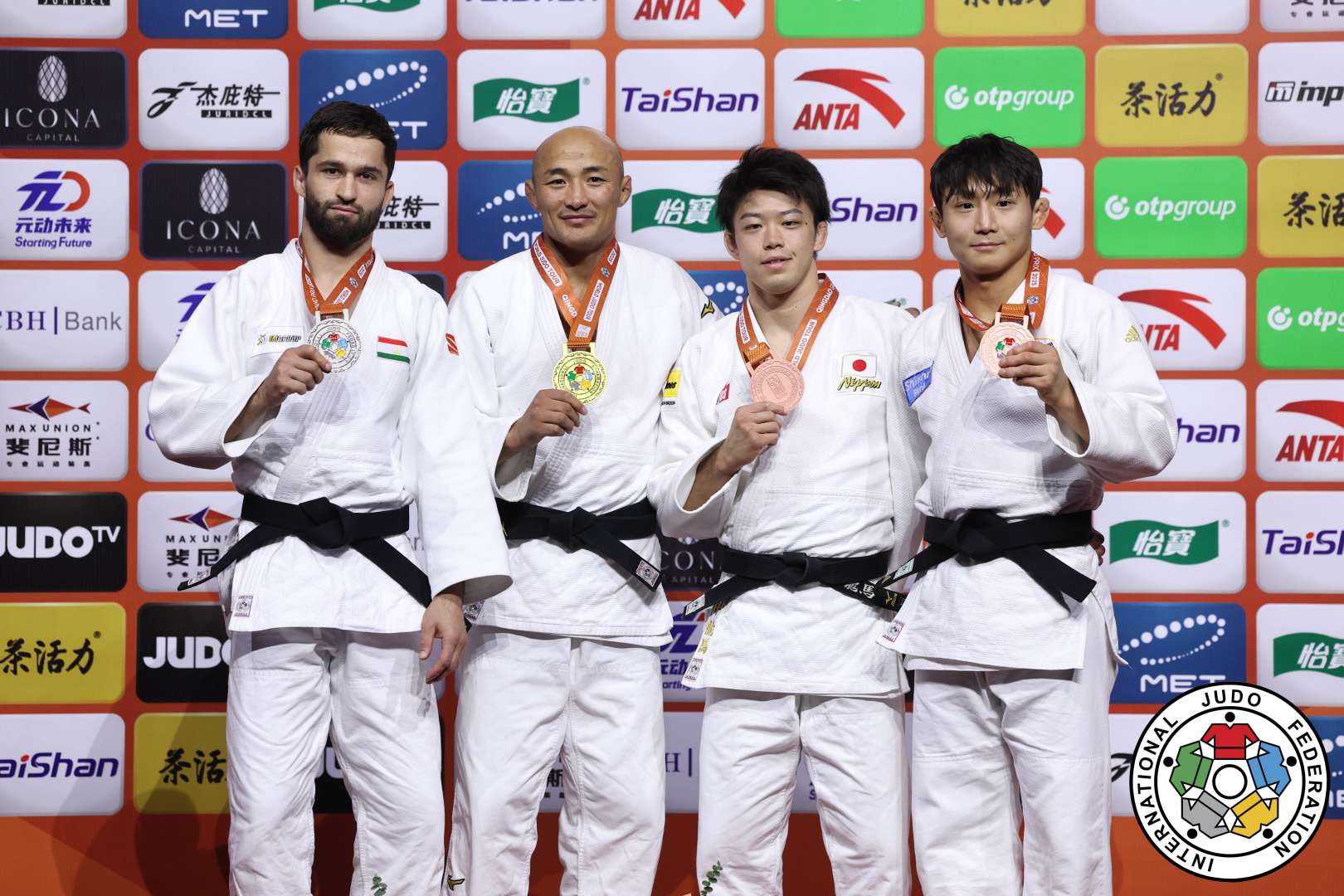
The 2025 Judo Grand Prix in Qingdao wrapped up with over 200 athletes from 26 countries competing for international ranking points and medals in one of the year's most prestigious judo events. Tajikistan's national team made a strong impression, finishing in the top 10 overall with one silver, one bronze, and several other strong showings.
Jebov claims silver, Majidov takes bronze
Tajikistan’s standout performer was Obid Jebov in the 66 kg category. After entering the tournament in the second round, he confidently defeated Kazakhstan’s Nurmuhammad Botaboy and advanced to the semifinals, where he overcame South Korea’s Jangyong Kim. In the final, Jebov faced Mongolia’s experienced judoka Baskhuu Yondonperenlei for the third time, but once again fell short. Still, a silver medal at this level marks a significant milestone for Jebov.
In the 100 kg category, Jahongir Majidov had an impressive run. He dispatched South Korea’s Hansu Kim and Britain’s Max Gregory before falling to Hungary’s Zsombor Veg in the semifinals. Majidov rebounded in the bronze medal bout, defeating Poland’s Michal Jedrzejewski to secure third place.
Strong performances beyond the podium
Masoud Ahmadzoda narrowly missed a medal in the 73 kg division. He scored victories over American Steven Boldbatar and UAE’s Kazbek Naguchev before losing in the semifinal to Uzbekistan’s Shahrom Akhadov. In the bronze medal match, he was defeated by Shamil Zulfikorov (competing under the IJF flag), placing him fifth overall.
Two other Tajik judokas finished seventh in their respective weight classes:
- Muhammadsaleh Quvvatov (60 kg), who won his opening match against South Korea’s Hyesun Hwan before falling to Japanese contenders Kondo and Nakamura.
- Somon Mahmadbekov (81 kg), who beat China’s Sailike Songhaer but was eliminated by Kazakhstan’s Adilet Almat and later lost his repechage bout to UAE’s Khojimurod Umarov.
Several other athletes — Mehrzod Sufiyev (60 kg), Abubakr Sherov (73 kg), and women’s team members Alexandra Kan (57 kg) and Viktoria Kiselyova (+78 kg) — exited early but gained valuable international experience.
Ranking points and prize money at stake
Beyond medals, athletes also earned ranking points toward the International Judo Federation (IJF) standings: 300 points for gold, 180 for silver, and 120 for bronze — key metrics for Olympic qualification and seeding at future events.
The tournament also awarded cash prizes: €3,000 for gold, €2,000 for silver, and €1,000 for bronze, with a portion traditionally going to coaches.
Global standings: Japan dominates
Japan topped the medal table with five golds and three bronzes, followed by Mongolia (2 gold, 1 silver, 3 bronze) and France (2 gold, 1 silver, 2 bronze).
Tajikistan, with one silver, one bronze, and strong finishes in several categories, placed 10th overall — a notable achievement in a competitive field of 26 nations.
 Руcский