




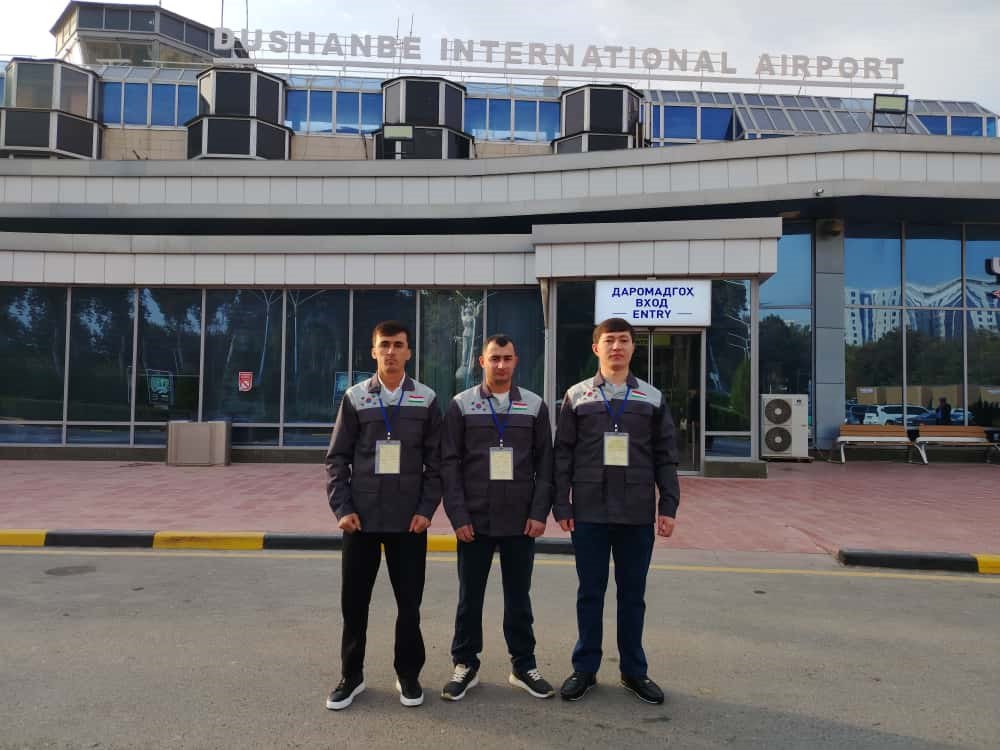
Tajikistan has officially launched the employment of its citizens in South Korea under the Employment Permit System (EPS), a government-to-government initiative implemented in partnership with South Korea’s Human Resources Development Service (HRDK).
The first three Tajik citizens have already departed for South Korea to begin work, marking a significant milestone in bilateral labor cooperation. This follows the recent establishment of the EPS Center under the Agency for Overseas Employment (Agency) in Dushanbe, which oversees the coordination of this initiative.

According to the Agency, two rounds of the EPS-TOPIK exam — a Korean language and skills assessment — were held on May 27 and August 2–3, 2025. These sessions targeted job seekers in the fields of welding and manufacturing, with 263 candidates participating. Out of those, 58 successfully passed the exams, making them eligible for employment opportunities in South Korea.
This success stems from a Memorandum of Understanding signed between Tajikistan and South Korea on October 31, 2024. In less than a year since the agreement was signed, tangible progress has been made, thanks to coordinated efforts by the governments of both countries, the Embassy of South Korea in Dushanbe, and the Agency for Overseas Employment.
Notably, Tajikistan achieved this result in record time compared to other countries participating in the EPS program, where it typically takes two to three years to send the first group of workers.

How the EPS program works
Candidates undergo a two-stage assessment process for the EPS program. The first stage evaluates their proficiency in the Korean language through the EPS-TOPIK exam. The second, known as the Skill Test, assesses technical abilities. Those who pass both stages are entered into South Korea’s SPAS database, where employers can select workers.
Successful candidates are then issued E-9 work visas valid for up to five years, and employment contracts are signed. Currently, 58 Tajik citizens are listed in the SPAS system, with the first three already deployed to South Korea.
About the EPS partnership
The EPS is managed by HRDK, a state-run organization under South Korea’s Ministry of Employment and Labor. Established in 1982, HRDK promotes vocational training and employment. As one of the world’s leading industrial economies, South Korea relies on foreign labor to meet workforce demands — a need the EPS system was designed to address.
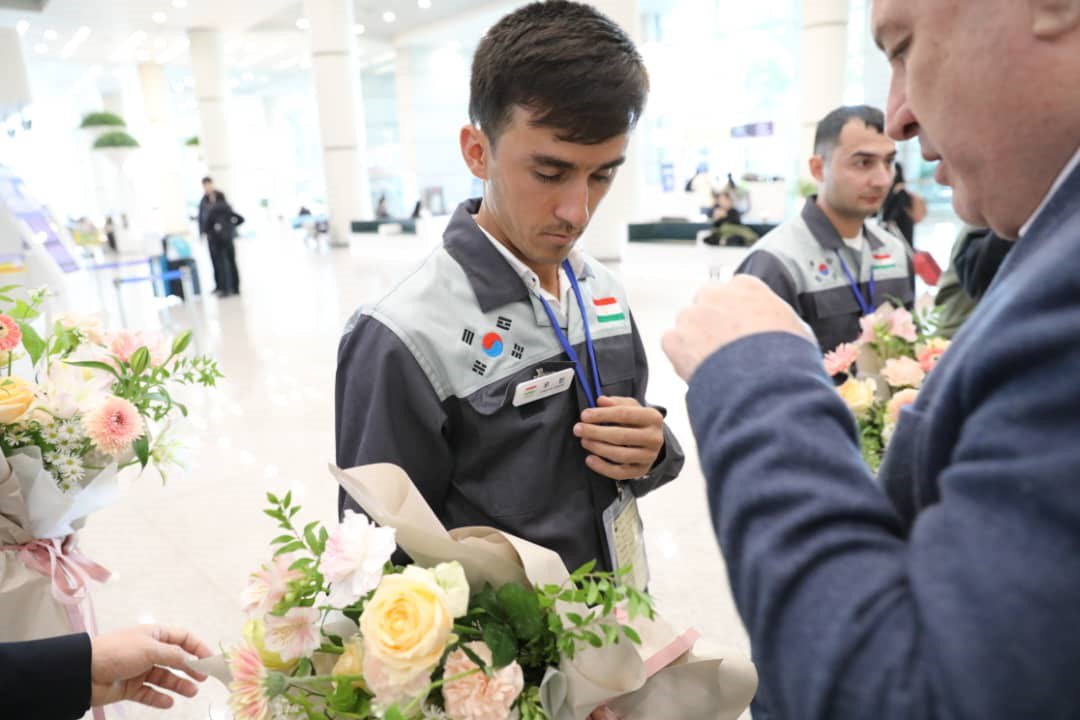
Tajikistan is now the 17th country to join the EPS network, which previously included 16 nations across Asia.
Transparent and free recruitment process
All recruitment procedures under the EPS program are handled exclusively by Tajikistan’s Agency for Overseas Employment, under the Ministry of Labor. The entire process — from registration to job placement — is conducted without intermediaries and is completely free of charge for applicants.
EPS vs. seasonal work: key differences
Authorities emphasize that the EPS program (E-9) should not be confused with seasonal employment. While seasonal jobs typically last up to six months and are often informal, EPS employment offers up to five years of legal work in South Korea, complete with social security and labor protections.
To qualify for the EPS program, applicants must be aged 18 to 39, possess Korean language skills, and pass the EPS-TOPIK exam.
 Руcский
