




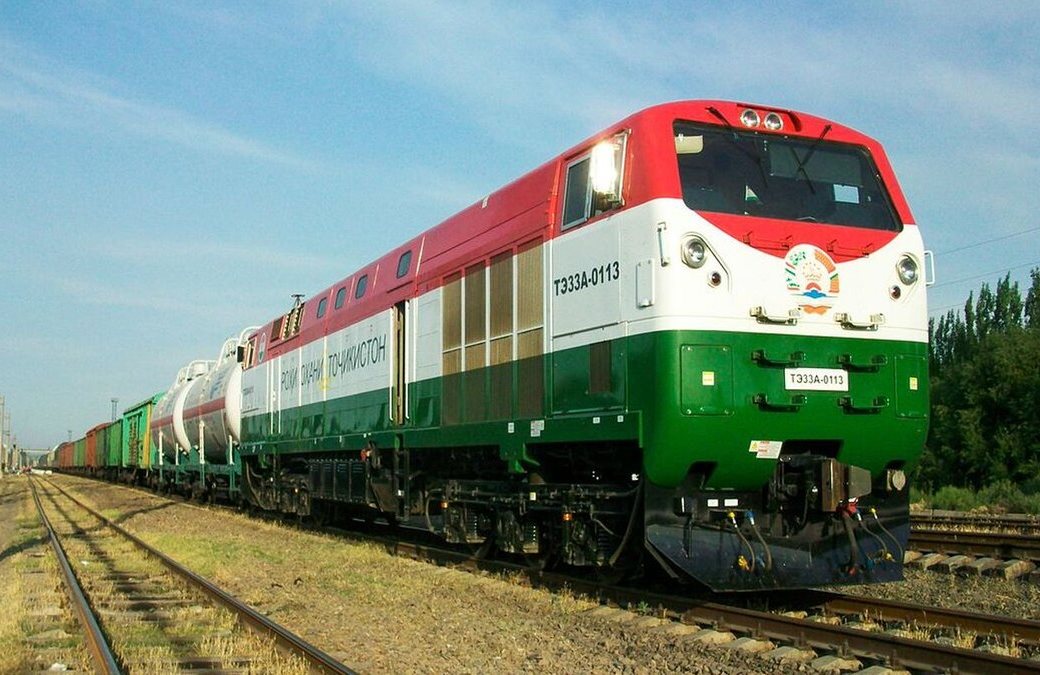
The leadership of the state-owned railway company, Rohi Ohani Tojikiston (Tajik Railway), is currently conducting preliminary work on the electrification of the Vahdat-Pakhtaobod railway line, the Minister of Transport Azim Ibrohim, announced at a news conference in Dushanbe on July 23.
According to the minister, electrification will reduce the costs of the railway company by enabling more efficient resource use and will improve transportation convenience.
The Vahdat-Pakhtaobod railway line connects the township of Vahdat (located 20 km east of Dushanbe) with the capital and further extends to the railways of Uzbekistan through the Pakhtaobod settlement, which is located at the Tajik-Uzbek border. The total length of the Dushanbe-Pakhtaobod route is 62 km.
This section of the line serves a commuter train that runs daily between Dushanbe-1 station and Pakhtaobod, with 15 intermediate stops. The travel time is approximately one hour, making this route convenient for daily commutes between the capital and the suburbs.
Additionally, the minister mentioned that the electrification of the Konibodom-Bekobod railway (a city in Uzbekistan located on the western border of Tajikistan’s Sughd province) is also under consideration.
In 2021, it was reported that the railway companies of Tajikistan and Uzbekistan planned to sign an agreement for the construction of a power transmission line along the Bekobod-Konibodom-Kokand railway section, with a total length of 204 km.
The leadership of Tajik Railways noted that preliminary work on this project had already begun last year with specialists from both countries, but the agreement has not yet been signed.
The electrification project for the railway section was originally planned during Soviet times in three stages: Tashkent-Bekobod, Bekobod-Konibodom, and Konibodom-Kokand.
Currently, the total length of railway tracks in Tajikistan exceeds 980 km, including approach and technical tracks.
According to data of the Ministry of Transport, about 70% of international freight transportation over the first six months of this year has been carried out by rail.
 Руcский