




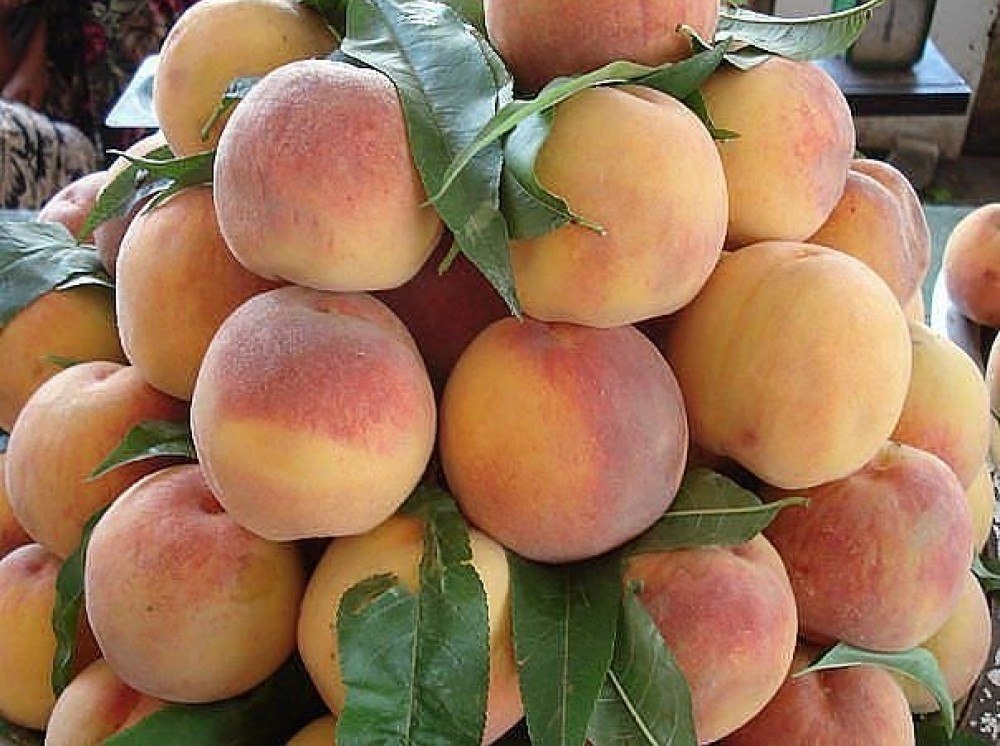
Tajikistan has a long-standing tradition of growing peaches — fragrant and juicy fruits cultivated for centuries in the fertile valleys of the Khatlon and Sughd provinces. While there are no large-scale industrial plantations, smallholder farms consistently produce reliable harvests each year.
According to Nourmahmad Kamolov of the Institute of Horticulture, the country’s peach cultivation was previously limited due to the Soviet-era focus on cotton monoculture. Today, however, interest in peaches is growing thanks to their profitability.
How peaches grow
Peach trees begin bearing fruit in their third year and can remain productive for up to 20 years with proper care. Since peaches are cross-pollinated, experts recommend planting multiple varieties to ensure pollination and extend the harvest season from early summer to late autumn.
Peach trees tolerate cold well but are sensitive to spring frosts, especially during flowering.
A diversity of varieties
About 15 varieties are cultivated in Tajikistan, including the popular “Alexander” and “Cumberland,” the nectarines “Lola” and “Obilny,” and the local flat variety “Anchiri Surkh.” The “Ravgani Gov” line is notable for its late-season, yellow-fleshed fruits ideal for drying and fresh consumption.
Global context
Worldwide, 23–25 million tons of peaches and nectarines are grown annually, with China accounting for around 70% of global output. Tajikistan produces 30,000–32,000 tons annually — just 3 kg per capita — far below the global average.
Fun facts about peaches
- The scientific name Prunus persica for the peach translates to "Persian plum", the name "Persian apple" was also used in the past to refer to peaches. The Romans called the fruit malum persicum, which literally translates to "Persian apple". This historical naming reflects the early European belief that peaches originated in Persia, though they are actually native to China.
- Nectarines are a fuzzless mutation of peaches.
- The first basketball hoops were made from peach baskets in 1891. Peaches don’t grow wild and were developed through selective breeding. The first fruit eaten on the Moon was a peach, by Apollo 11 astronauts in 1969.
 Руcский