




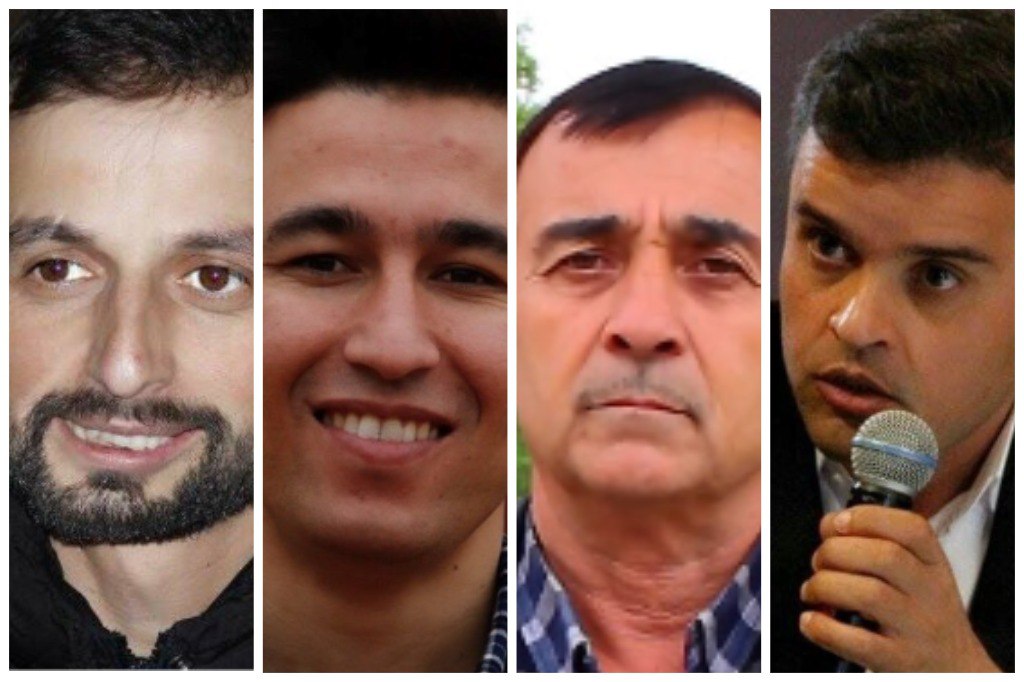
Representatives of Tajikistan's Office of the Human Rights Ombudsman have met with several imprisoned journalists and reported that they are in good health and have no complaints at present.
According to Husniddin Nidoyev, deputy head of the Department for Civil and Political Rights, the visit took place on May 5 at a correctional facility commonly known as "Pervy Sovetsky", where he met with journalists Daler Emomali, Zavqibek Saidamini, Abdullo Ghurbati, and Ahmad Ibrohim.
“We are in constant communication with them,” Nidoyev stated during a news conference on August 4. “Even during phone conversations with prison officials, we inquire about the well-being of those whose names are frequently mentioned in the media.”
However, concerns have recently been raised by the family of another detained journalist, Abdusattor Pirmuhammadzoda. His relatives claim that he was placed in a punishment cell (SHIZO) in March, and they have not been able to contact or visit him since.
Abdukarim, Pirmuhammadzoda’s brother, told Asia-Plus news agency that the family has received no news from him for several months. He recounted how commissions visited the Khujand prison in March in connection with an amnesty and interviewed inmates, including Abdusattor.
“He told the commissions: ‘I’m innocent — why am I not on the release list?’ They didn’t respond. But after the commissions left, the prison administration punished my brother,” Abdukarim said. “To our knowledge, he’s now in SHIZO. His wife and children have tried to see him multiple times but were denied. We’re very worried about his health.”
Nidoyev confirmed that his office last met with Abdusattor Pirmuhammadzoda in 2024, during a visit to the Khujand prison. He acknowledged that there has been no meeting with him this year but said they would look into his current condition.
Concerns about the health of other detained journalists have also surfaced. In early July, Makhfirat Khudoynazarova, the wife of Zavqibek Saidamini, reported that her husband had been suffering from a nervous disorder since his incarceration. She added that he had been experiencing persistent eye and spinal pain for over a month.
“We’ve sent him medications, and he is taking them. They said he was examined by an ophthalmologist and treated. But he’s still not feeling well,” Khudoynazarova said with concern.
Meanwhile, the families of Daler Emomali and Ahmad Ibrohim stated that both journalists are in good health. Their only grievance, they noted, is their continued imprisonment.
All five journalists received lengthy prison sentences following their arrests. Ahmad Ibrohim was sentenced to 10 years and 4 months, Daler Emomali to 10 years, Abdullo Ghurbati to 7½ years, and both Abdusattor Pirmuhammadzoda and Zavqibek Saidamini to 7 years each.
Despite appeals filed by their lawyers and relatives, higher courts upheld the original verdicts without any changes.
International groups, including Human Rights Watch and the Committee to Protect Journalists (CPJ), have called on the Tajik government to release the reporters and end its campaign against the free press.
A report released by the CPJ on December 14, 2022 says Tajikistan held six journalists, making it the leading jailer in Central Asia. The report, in particular, notes that the prisoners were tried secretly behind closed doors in detention centers, not courts, and sentenced to lengthy prison terms amid allegations of torture.
Recall, six Tajik journalists and bloggers Mamadsulton Mavlonazarov, Abdullo Ghurbati, Daler Emomali, Zavqibek Saidamini, Abdusattor Pirmuhammadzoda, Khoushrouz Jumayev and Ulfatkhonim Mamadshoyeva were sentenced to prison terms of between seven and twenty-one years.
They were charged with spreading false information, participation in extremism community and collaboration with banned organization. The journalists themselves and their relatives reject these charges as absolutely unfounded.
 Руcский