




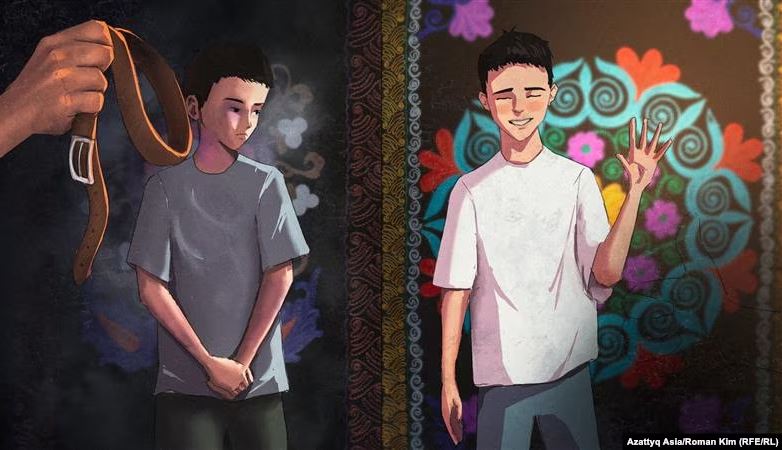
"This is my child and I’ll bring him up as I want" – this phrase, familiar to many, often serves as an excuse for violence. It often hides cruel forms of child abuse that go beyond all imaginable limits. The recent case in Tajikistan shocked not only the residents of the country.
In many families in Central Asian countries, corporal punishment of children is considered the norm: slaps for poor grades, slaps as a method of persuasion, or flogging for disobedience. Why is this practice still so widespread and what consequences does it have?
According to statistics from the Ministry of Internal Affairs of Tajikistan, in 2024, 994 crimes against minors were officially recorded in a country with a population of 10 million people, 40% of whom are children and youth under the age of 28, which is a third more than in the previous year. Of these, 48 cases are associated with moderate and severe harm to health.
In 2024, Tajikistan became the 67th country in the world and the second, after Turkmenistan, in Central Asia, where corporal punishment was prohibited by law. A UNICEF representative in Tajikistan, who spoke to "Azattyk Asia" on condition of anonymity, said that according to the results of the latest medical and demographic study conducted by the Agency for Statistics of Tajikistan in 2023, 56% of children under the age of 14 were subjected to domestic violence, while the proportion of parents who consider physical punishment of children acceptable decreased from 15% up to 4% in five years.
However, according to UNICEF, the scale of violence against children in Tajikistan is significantly underestimated, and in everyday life, parents can still be seen hitting a child on the cheek or pulling his ear, allegedly "for educational purposes."
This spring, Tajikistan was followed by Uzbekistan, where the law "On the Protection of Children from all forms of violence" came into force, which explicitly prohibits parents from using corporal punishment and other forms of violence for educational purposes. The reason for its adoption was the data from a multi-indicator cluster survey conducted by UNICEF, according to which 62% of children under the age of 14 in the country were subjected to violent parenting methods.
In Kazakhstan, according to UNICEF, in 2023, 53% of children experienced at least one form of psychological or physical punishment from adult family members. Among the youngest, aged 1-2 years, 38% of children were subjected to violent parenting methods. At that time, the UN Committee on the Rights of the Child recommended that Kazakhstan strengthen child protection, including introducing an outright ban on corporal punishment in the family, as well as in specialized institutions and preschool organizations.
Kyrgyzstan has also announced its intention to ban corporal punishment of children. According to the 2023 Multiple Indicator Cluster Survey (MICS), 65% of children in Kyrgyzstan are subjected to severe disciplinary measures in their families, and about 37% of children are physically punished.
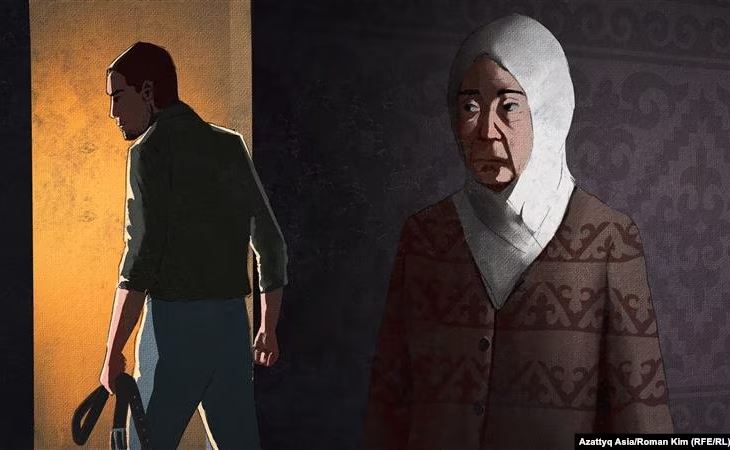
"Parental illiteracy" and why do parents punish their children
Yelzhas Yertayuly, director of the Family Counseling Center "Happy Family" in Almaty (Kazakhstan) and author of the book "Parenting without Punishment", says that physical violence is often perceived by adults as a way to quickly achieve results.
"Many people think: why waste time explaining what is right and what is wrong when you can just yell or threaten a child and achieve what you want in a short period of time," he says.
According to him, aggression towards children is a manifestation of adult weakness, their emotional instability, inability to cope with stress and parental illiteracy.
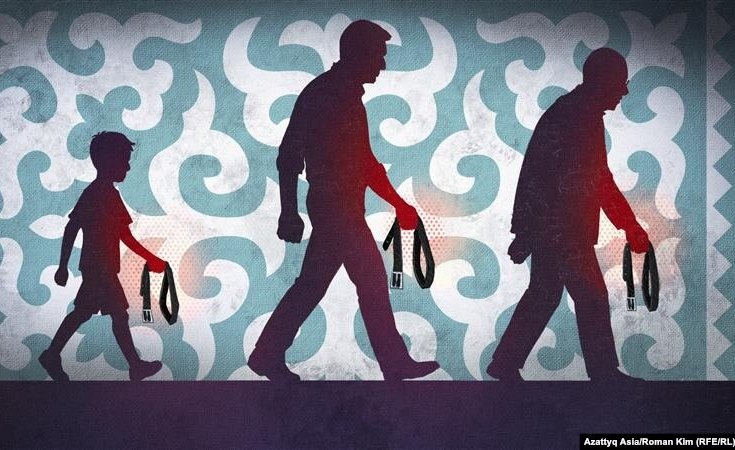
Madina Sharipova, a psychologist from Dushanbe and an associate professor of psychology at the Tajik National University, adds that domestic violence is often reproduced from generation to generation: children who have been physically punished later repeat the same behaviors as parents.
In recent years, another trend has become noticeable in Central Asia: parents beat and humiliate children demonstratively, recording their actions on video in order to send the recording to their spouses or other family members in order to take revenge on them for some kind of "misconduct" or achieve the desired.
Gulchehra Rakhmanova, Director of the Public Foundation "Legal Initiative" in Tajikistan, specializing in the protection of children's rights, conducted an analysis of cases in which minors in Tajikistan become victims of violence, including deaths. She highlights the important role of social factors in this, primarily poverty.
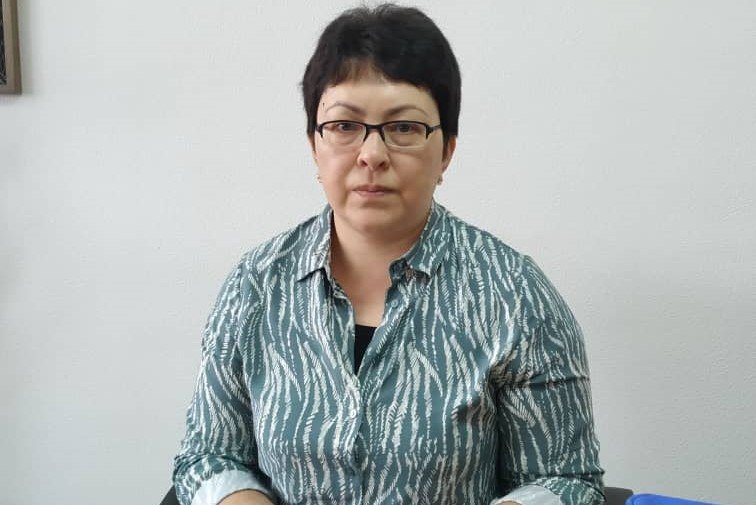
"A significant part of the country's population lives below the poverty line. Financial instability, lack of food, shelter, and clothing create high levels of stress. In such conditions, aggression often spills out on the most vulnerable – on children," - says Rakhmanova.
Children of migrant workers are in a special risk zone. Parents who have gone to work often leave their children in the care of relatives. But they don't always provide them with safety and care. In some cases, this leads to tragedies. So, in March 2024, in the Tashkent region, a woman brutally beat her six-year-old niece for not doing her homework. The girl died three days later in the hospital.
The consequences
Only the most egregious cases often leak into the public field, but the practice of corporal punishment remains widespread and ingrained in Central Asia, says Muazzam Ibragimova, a child psychologist from Uzbekistan.
Meanwhile, she notes, countless studies by psychologists, educators, and neuroscientists have unequivocally proved that violence as a method of parenting causes enormous, sometimes irreparable harm to a child.
According to her, such methods undermine the basic sense of trust and security. The child loses his sense of support in the world, because the pain is caused by the one who is supposed to protect. This destroys intimacy and creates chronic stress.
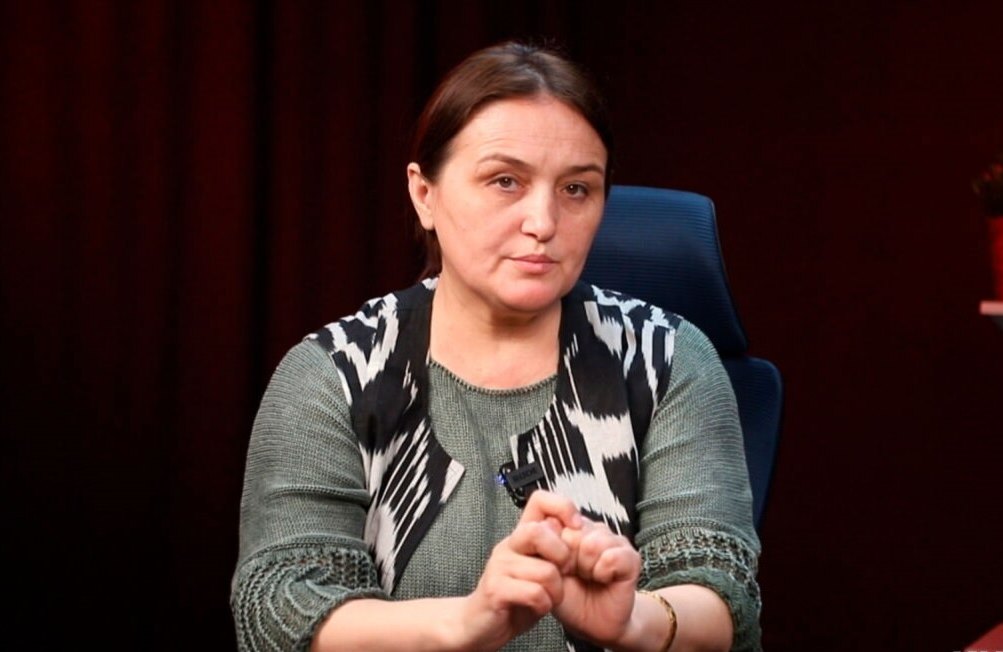
"If punishments are repeated, - says Ibragimova, the child develops a stable sense of anxiety and fear, not only of adults, but also of the possibility of making a mistake."
According to the psychologist, physical violence also undermines self-esteem: the child ceases to distinguish between an act and a personality. He doesn't think: "I did something wrong," he thinks: "I'm bad," which destroys his personality. In addition, a child who is physically punished learns a destructive model: "By force you can achieve submission" and in the future will either begin to suppress others himself or will look for someone who will suppress him.
Madina Sharipova, a psychologist from Dushanbe, emphasizes that the consequences of violence can affect not only mental development, but also manifest themselves physically. In the early stages, it may be delayed speech, stuttering, enuresis, sleep problems, and increased anxiety.
"Parents take their child to the doctors, take dozens of tests, and the result is "everything is fine," because the reason is psychological trauma," - Sharipova explains.
In adolescents, the consequences can take the form of depression, post-traumatic stress syndrome, which can last for years; suicidal thoughts, self-harm.
Collective responsibility
Circles continue to disperse in Tajik society after the death of a teenager at the hands of his father in Tursunzade. The man is in custody. According to the head of the Child Rights Protection Department of the Ombudsman's office, Suhaili Kodiri Abdukhafizzoda, the father's actions are qualified under article 110, part 3 of the Criminal Code of Tajikistan ("Causing serious harm to health, resulting in death by negligence").
The maximum penalty is 15 years in prison. However, Abduhafizzoda says, this is a preliminary qualification, since additional circumstances may come to light during the investigation.
According to the Head of the Child Rights Protection Department of the Ombudsman's Office, Tajikistan's legislation in the field of the prevention of corporal punishment and protection of children's rights fully complies with international standards and documents.
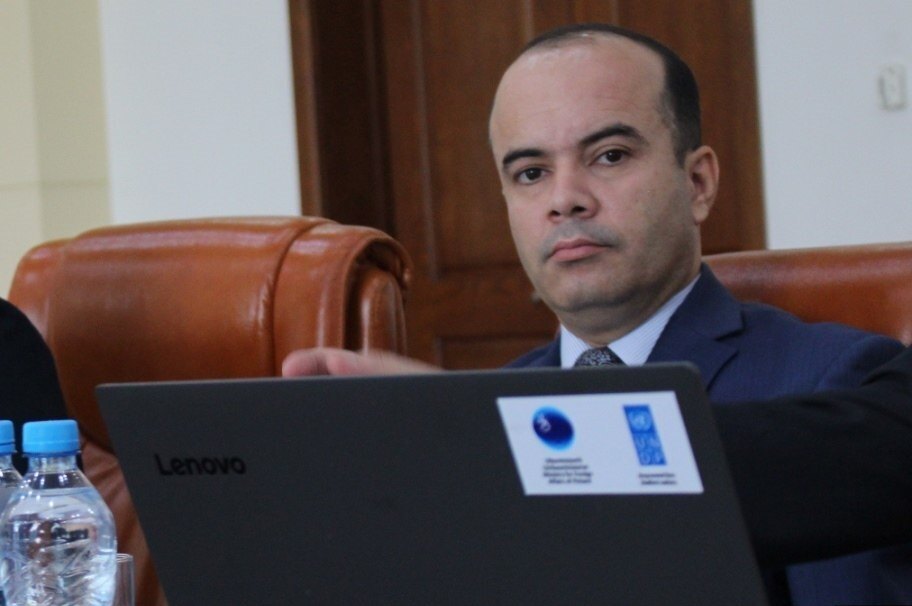
"After the adoption of the law on parental responsibility for the upbringing and education of children, as well as amendments and additions to the law on the Protection of Children's Rights, penalties have become tougher, and the regulatory framework has become stricter," he said.
According to Abduhafizzod, the problem often lies in the fact that if violence is committed within the family, it remains inside this enclosed space.
"A child may be afraid to tell, may trust his abusers, and may love them. Therefore, collective responsibility is especially important – for the police, the school, society, and the family itself. Unfortunately, society often does not respond. The case of the boy in Tursunzade showed that it was not a sudden tragedy. The child, according to local residents, has been tortured for a long time. Probably, the neighbors and relatives knew, but did not interfere. Meanwhile, any signs – bruises, anxiety of the child should be perceived as a signal."
Society is used to considering domestic violence as a "personal matter" that should not be interfered with, adds Gulchehra Rakhmanova, director of the Public Foundation "Legal Initiative" in Tajikistan.
"Neighbors and relatives are afraid of conflict or consider physical punishment to be the norm. Schools and doctors are often not trained to recognize the signs of violence and do not know how to act. Social services are poorly equipped, overloaded, and often formally perform their duties. Child rights commissions are ineffective due to lack of resources, coordination and responsibility. As a result, there is no rapid response and child protection system in the field."
 Руcский
