




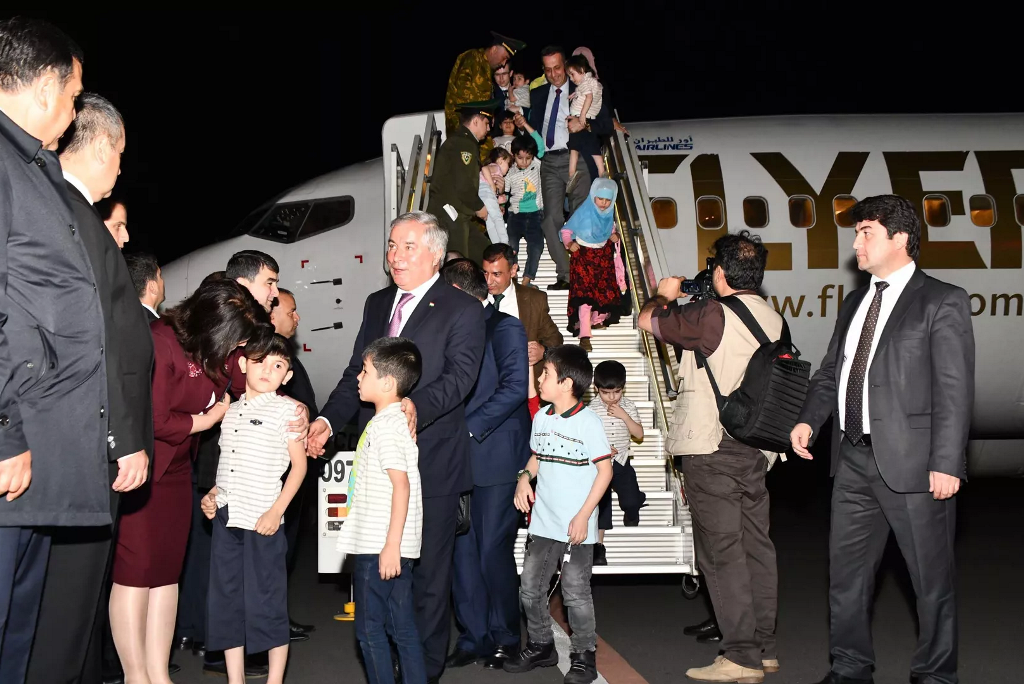
Thanks to a government program focused on rehabilitation, adaptation, and education for women and children repatriated from war zones, hundreds of children in Tajikistan are now rebuilding their lives — learning to dream again about simple things: living at home, going to school, and making friends.
Conflicts in the Middle East — especially in Syria and Iraq — have deeply affected civilians, with women and children bearing the brunt. In response, the Tajik government committed to bringing its citizens back from refugee camps and protecting their basic rights.
Returnee families face many challenges: lack of documents, housing, limited access to education and healthcare, and social stigma. Overcoming these obstacles requires a coordinated approach. Social workers play a key role in helping these children adapt, recover from trauma, and reintegrate into society.
Estimates from both national and international sources indicate that dozens of children and women have returned home through repatriation missions between 2019 and 2023; including: 84 children returned in 2019; 102 children and 44 women returned in 2022; 73 children and 31 women returned in 2023; and 32 children and 15 women returned in 2024.
Upon their return, many of the children were placed either in special care institutions or, when possible, reunited with relatives.
Parviz: a dream of school and family
The twelve-year-old Parviz now lives with his sister and aunt in Jabbor-Rasulov district, Sughd province. His parents remain in the conflict zone. “I miss my parents and dream of living together again. Our aunt takes care of us, but I still long for their love,” he says.
Adapting was difficult — Parviz had no birth certificate and couldn’t attend school. With help from social workers, his documents were issued, and he received school supplies. After undergoing surgery in Russia for hydrocephalus, Parviz fully recovered and now studies in grade 6. He loves playing football, chess, and riding his bike.
Khalid: acceptance and a dream to be a dentist
The Eleven-year-old Khalid lives in Sarazm village, Panjakent of Sughd province with his mother, grandmother, and brothers. He enjoys school, especially Tajik language, math, and drawing. His family’s financial difficulties once made it hard for him to participate in school activities, causing stress.
A social worker intervened, helping his mother see the value of involvement. This boosted Khalid’s morale. Today, he dreams of becoming a dentist like a neighbor he admires.
Yosuman, Komron, and Siyovoush: reclaiming childhood
These three siblings from Farkhor district in Khatlon province returned from Iraq in 2019 after losing their parents. Initially placed in an orphanage, they were later reunited with their grandmother through the efforts of social workers and provided with school supplies, clothing, and medical care.
Yosuman wants to become a Tajik language teacher. Komron dreams of being a scientist, while little Siyovoush is happily attending kindergarten and making his first friends.
Amida: the first step toward a dream — school
Amida returned to Tajikistan in 2019 and settled with her mother and four younger siblings in her aunt’s house in Spitamen district, Sughd province. The family faced severe financial hardship: her mother could not work because of the young children, and they had no home of their own.
Amida’s biggest dream was to go to school — but without a birth certificate, she could not enroll. Social workers helped obtain the necessary documents and later provided her with school uniforms, shoes, and stationery.
“I am so happy to go to school! I have made many friends, and every day I walk there with joy,” she says.
For Amida, access to education became the first fulfilled dream — and a step toward a better future.
Davron and Nouriya: a path to recovery
Teenagers Davron and Nouriya from Vose district in Khatlon province returned from Syria with their mother in 2022. After losing their home, they moved into their aunt’s house. Their years in a war zone left deep psychological scars, and lacking documents kept them out of school.
“I felt life was unfair. Why can other children go to school, and I can’t? Why don’t I have friends?” Nouriya recalls.
Social worker Adolat began assisting the family in late 2024. With the help of local authorities and international organizations, both children received birth certificates, school supplies, and free medical checkups.
The family also applied for a land plot and will soon have a home of their own — another long-awaited dream finally becoming reality.
Gulbahor and Lola: from fear to confidence
After returning to Tajikistan, the girls were first placed in a sanatorium where they received psychological and medical assistance. Later, they moved to their grandmother’s home because they had nowhere else to live.
Gulbahor often woke up at night remembering explosions, and Lola feared communicating with neighborhood children — the unfamiliar language and environment frightened her. Although they wanted to study, neither girl attended school.
A social worker began assisting the family late last year, helping them prepare documents and secure social aid — food, medicine, clothing, and school supplies.
Local authorities allocated a land plot, allowing the family to finally settle in a home of their own. Psychological support helped Gulbahor regain confidence.
“I want to be a teacher. My class teacher inspires me, and I want to help other children learn,” she says.
Gulbahor now teaches her younger sister Tajik, and Lola has begun playing outside and making friends for the first time.
Niso: from dreaming of bread to starting first grade
Niso, her mother Latifa, and six-year-old brother Umar returned to Tajikistan after living in a war zone. Their new home — the dilapidated house of their grandfather — had no furniture, no kitchen, not even dishes. In those first days, Niso’s only dream was to eat warm bread baked by her mother.
Latifa was emotionally drained, struggling to survive and receiving no response to her cries for help. When a social worker first visited, she refused to engage.
“Gulrukhsor, the social worker, came several times. Only on the third visit did my mother finally speak with her,” recalls Niso.
With state support and the help of the social worker, the family received legal, psychological, and financial assistance. The children were issued birth certificates — now Umar attends kindergarten, and Niso is enrolled in first grade. The family was provided with basic necessities, including household items and clothing.
And Latifa has started baking bread again — just as her daughter dreamed.
Rustam: drawing through the silence
The twelve-year-old Rustam felt like an outsider after returning to Tajikistan. While other children played outside, he stayed indoors, drawing for hours. His pictures told his story — deserts, tents, explosions, and the wounded. When a social worker first visited, Rustam hid in his room.
After reviewing his drawings, the worker realized the boy urgently needed psychological help. Therapy began, and work to restore his documents was launched.
Within two months, Rustam received his birth certificate and began attending school. Now, his drawings show trees, flowers, school — and new friends. He even teaches other children how to draw. His art no longer reflects trauma but hope.
About the project
These stories became possible through a project implemented by the Tajikistan branch of Caritas Germany, in partnership with the Ministry of Health and Social Protection and the National Association of Schools of Social Work.
The initiative is part of the national government program for the rehabilitation, adaptation, employment, and education of women and children repatriated from conflict zones (2023–2027), as well as the Action Plan for 2023–2025.
This is more than support. It’s a chance — a chance for children to dream again and build a future.
 Руcский
