




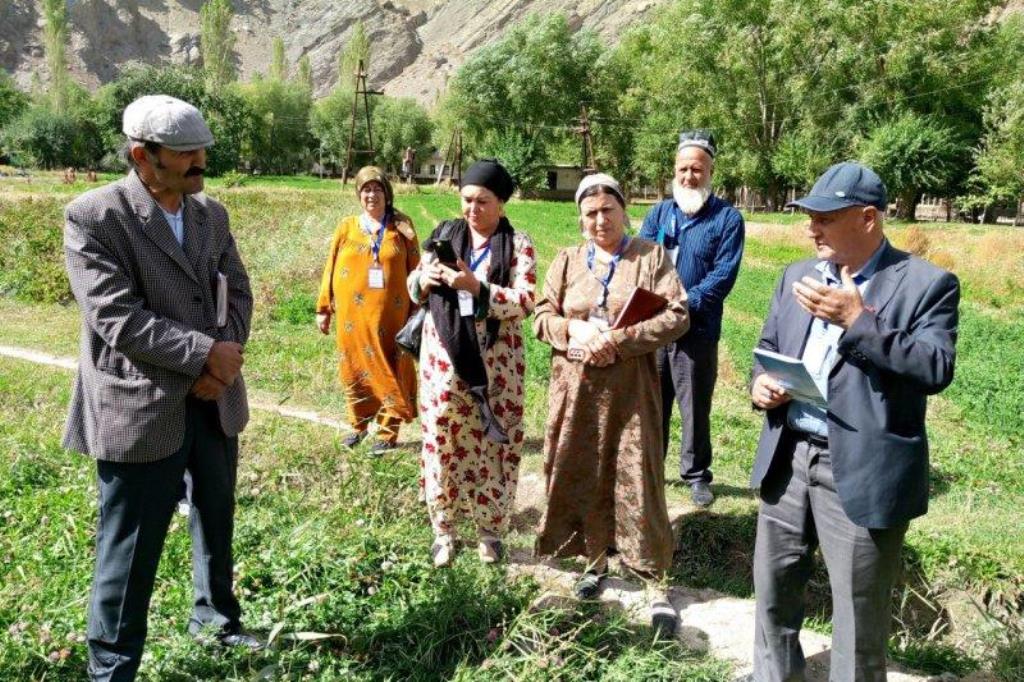
In Rushan and Ishkashim districts of the Gorno-Badakhshan Autonomous Region (GBAO), public seed banks have been established with the support of the Women and Earth and Pulse of the Planet NGOs. These initiatives aim to preserve traditional agricultural varieties and protect the country's agro-biodiversity.
In late September, experts and scientists from Dushanbe and Khatlon province visited GBAO to observe the activities of these seed banks, exchange seeds, and share knowledge on seed storage practices.
According to Muhabbatkhon Mamadaliyeva, the Candidate of Science in Biology, seed banks play a crucial role in preserving traditional varieties of crops such as wheat, barley, peas, lentils, flax, sesame, millet, legumes, onions, local cabbage, vegetables, and corn. These seed collections are created through the efforts of local farmers, community groups (jamoats), and scientists and are stored in specially equipped facilities.
The seed banks maintain detailed logs, recording information about seed ownership, variety names, geographic origin, harvest year, and quantities received. This systematic approach helps protect rare domestic plant samples and enhances the country's food security.
Scientists note that in recent years, foreign seeds of agricultural crops and trees have been widely imported into the country. This has led to the gradual disappearance of some unique local varieties, posing a risk of losing valuable plant genotypes. The local seed banks serve as a response to this issue, preserving national seed varieties for future generations.
During their trip, the delegation visited the villages of Khidez, Dasht, and Siponj (Bartang jamoat, Rushan district), as well as Tutgoz, Darshay, and Dasht (Pitup, Shitkharv, and Yusufbekov jamoats, Ishkashim district).
Scientists and farmers met with colleagues from the Pamir Biology Institute named after Academician Khudoyor Yusufbekov of the National Academy of Sciences of Tajikistan. The visitors from the southern regions brought seeds to exchange with their GBAO counterparts and shared their experience in seed storage.
Dr. Qurbonali Partoyev, an agricultural scientist, believes that the scientific and practical trip was an important step in strengthening knowledge and skills in the field of seed production. He emphasized that such initiatives will play a key role in revitalizing and preserving traditional seeds, thus ensuring Tajikistan's food security in the future.
 Руcский
