




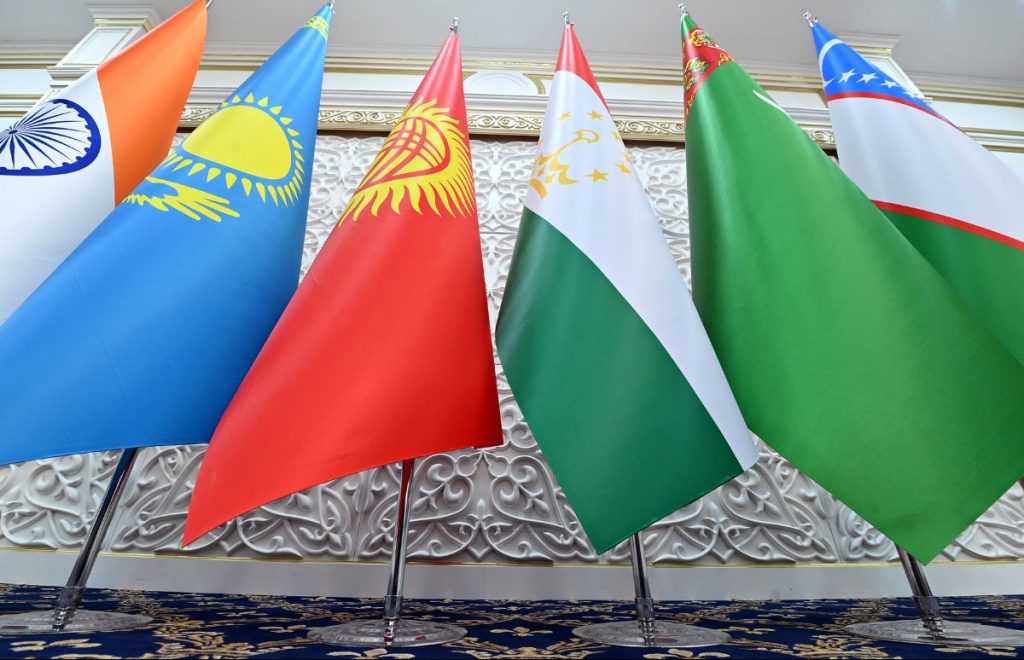
Central Asian countries should intensify their economic and strategic cooperation with India to unlock greater regional trade and investment potential, according to a new report by the Eurasian Development Bank (EDB).
The report, titled “Assessment of Trade and Investment Relations between India and Central Asia: Unlocking Economic Potential”, emphasizes the region’s unique geoeconomic position as a land bridge between Asia and Europe — a key strategic advantage for India.
“India is actively developing partnerships across Central Asia and has the technological expertise to offer in a wide range of industries,” the report notes.
Despite this potential, current trade ties between India and Central Asian nations remain limited. According to EDB analysts, Central Asia accounts for just 0.1% of India’s foreign trade, while India’s share in the region’s total trade is only 1%.
India’s main exports to Central Asia include pharmaceutical products, electrical equipment, and mechanical devices.
In return, India imports petroleum products, fertilizers, and metals from the region.
High-potential sectors for trade and collaboration
The EDB report identifies a wide range of goods with strong potential for expanded trade between the two regions. India could boost its exports to Central Asia by supplying machine tools, ground transport vehicles, electrical machinery, pharmaceuticals, optical and surgical instruments, clothing, and chemical products.
Conversely, Central Asian countries could increase their exports to India in areas such as mineral fuels, fertilizers, inorganic chemical products, rare earth metals, and other strategic commodities.
The report also highlights several promising avenues for joint ventures and technological partnerships. These include sectors such as petrochemicals, renewable energy, textiles, tourism, healthcare, and pharmaceuticals — industries where India can contribute expertise and investment, while Central Asia offers raw materials and market access.
Policy recommendations to strengthen India-Central Asia ties
To capitalize on the economic opportunities, the EDB outlines a set of policy recommendations aimed at enhancing trade and investment cooperation: promote trade in goods with the highest export advantage; establish joint ventures and foster active technological collaboration for knowledge and technology transfer; expand access to trade finance and other financial services for small and medium-sized enterprises (SMEs); simplify and digitize trade and customs procedures; and improve transport and logistics efficiency across the region.
Analysts believe that with targeted policy actions and deeper bilateral engagement, India and Central Asia can transform their currently modest trade volumes into a dynamic and mutually beneficial economic partnership.
 Руcский
