




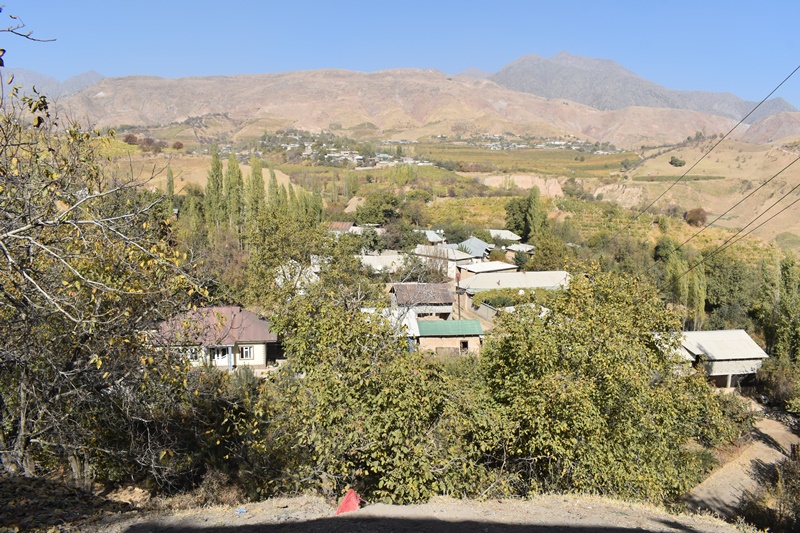
High in the Almosi Gorge, among steep slopes and vineyards, a unique transformation is taking place. Lolazor, a small mountain village, has become Tajikistan’s first digital and tourism-focused rural community — where tradition meets innovation, and hard work embraces the future.
Between tradition and technology: a new rural identity in the mountains
Out of 49 villages scattered across the valley, Lolazor stands out. It has preserved its age-old grape-growing heritage while embracing modern agricultural techniques and digital tools. Locals not only harvest crops here — they cultivate a future rooted in technology and sustainability.
The scenery is breathtaking. Vineyards gleam like a necklace along the mountainsides, glowing red and gold in autumn. Children fix potholes with shovels, laughing and asking for "haqqi roh" — a token toll — from passing drivers who happily oblige.
Where the wind turns grapes pink
“See these grapes?” smiles Jamoliddin Kalonov, a local gardener and community activist. “Elsewhere, the Taifi grape is white or red. Ours are pink — thanks to the wind. It comes down from the mountains and caresses the berries, making them translucent like amber.”
Lolazor is home to around 800 people across 120 households. Their pride is the pink Taifi grape — a symbol of the Almosi Valley and a local brand. Yet, even the most enduring traditions face challenges. Climate change has softened the once-firm grapes. In response, farmers now grow high-yield apple varieties such as Golden, Gala, Pink Lady, and Granny Smith, grafted with local roots.
According to FAO, these techniques can boost harvests by 40% while cutting water usage by up to 25% — crucial in this dry region.
Strength in sheep: the Hisor breed
If grapes are the heart of Lolazor, Hisor sheep are its pride. Known across Central Asia, these animals can weigh up to 150 kg, with up to 25% fat content. Though once free-ranging, today they are kept in shelters due to drought and pasture loss. Locals carefully maintain the breed, viewing it as cultural heritage.
Lolazor is also home to apiaries, mushroom farms launched after FAO training, and even a saffron-growing experiment — a rarity in mountain zones. Its vivid purple blossoms bring color to sun-scorched hills.
This is no longer just a grape village. Lolazor is becoming a model of diversified, sustainable rural enterprise.
From tradition to innovation
Frequent droughts pushed villagers to seek new solutions. With support from the UN’s Food and Agriculture Organization (FAO), over 20 training sessions helped farmers adopt drip irrigation, fruit drying, mushroom cultivation, and digital skills.
This led to the formation of Digital Lolazor — an online community where members share advice and innovations. “Our village is now like an open-air university,” says Jamoliddin.
Locals film short videos, run Instagram accounts, and share their achievements online. At the forefront is activist Ma'ruf Ashourov, who was abroad on a work trip during the reporting visit.
Lolazor is a place where tradition and technology merge into a seamless whole — what residents call “a new life for old land.”
Battling nature’s challenges
Water remains the biggest hurdle. The Khonaqo River runs far below, and springs dry up by early summer. Farmers dig wells, install drip systems, and collect rainwater in cisterns. Every drop is precious here.
The UN reports that 40% of Tajikistan’s agricultural land is threatened by degradation. Drought and heat reduce grape yields by up to 25%, and apples grow smaller. But the community refuses to give in.
Building infrastructure together
Lolazor is a model of grassroots development. Residents built a new school, clinic, repaired roads, and are raising funds for a deep water well. These efforts foster not only infrastructure — but trust and self-confidence.
In 2025, more than 500 tourists visited from across Tajikistan and abroad. While there are no hotels yet, locals welcome guests into their homes, offering fresh food and warm hospitality. FAO has trained residents in agritourism and digital marketing.
The village is turning into a living museum of crafts, flavors, and traditions.
Future outlook
Unlike neighboring villages, nearly every resident in Lolazor has undergone training, knows how to use a smartphone, and shares their knowledge. Living standards are rising, and investors are taking notice.
A cooperation agreement was recently signed with Yuksalish village in Uzbekistan’s Fergana region, with academic exchanges and joint research supported by local universities.
Still, challenges remain: unstable electricity, rough roads, limited infrastructure, and staff shortages. If these issues are resolved, Lolazor could become a flagship of rural revival in 21st-century Tajikistan.
 Руcский