




The second Human Rights Dialogue between government bodies and civil society on the protection and promotion of human rights was held at the Hyatt Regency Dushanbe. Participants not only presented reports but also developed recommendations and exchanged ideas on key issues.
The event was organized by the public organization Mir Prava in collaboration with the Dutch foundation Perspectivity Challenge, as part of two projects: "The Path to Justice: Strengthening Human Rights through the Prevention of Torture and Penitentiary System Reform", funded by the European Union, and "Promoting Human Rights in Tajikistan through Empowering the Ombudsman, Strengthening Civil Society, and Improving Legal Assistance for Vulnerable Groups in Detention", funded by the Canadian Fund for Local Initiatives (CFLI).
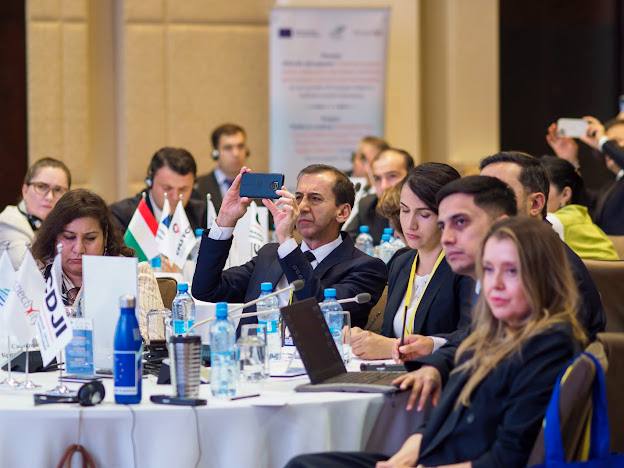
The dialogue was held with the support of the European Union, and the Executive Office of the President of Tajikistan, the Ombudsman of Tajikistan, and the Regional Office of the UN High Commissioner for Human Rights for Central Asia served as partners.
Mir Prava highlighted that the "Path to Justice" project aims to strengthen the potential of civil society organizations, young lawyers, the judicial system, law enforcement agencies, and prison staff in Tajikistan. The project covered 60,000 human rights information campaigns, 10 social media campaigns. The project also provided nearly 110 psychological consultations for human rights defenders.
"To protect human rights in practice"
The second "Human Rights Dialogue: New Priorities and Reforms 2025-2030" brought together representatives from government bodies, civil organizations, international experts, and partners to discuss the progress of recommendations made during the first Dialogue in 2024 and to set new priorities in the human rights sector.
Key attendees included officials from the Executive Office of the President of Tajikistan, Parliament, the General Prosecutor's Office, the Supreme Court, and other state agencies, as well as national and international human rights organizations, experts, and youth representatives.
The objectives of the event included assessing the progress of the 2024 Dialogue's recommendations, developing new solutions for preventing torture and improving conditions in detention facilities, defining the role of digital technologies in ensuring access to justice, and promoting gender equality and inclusion in national reforms.
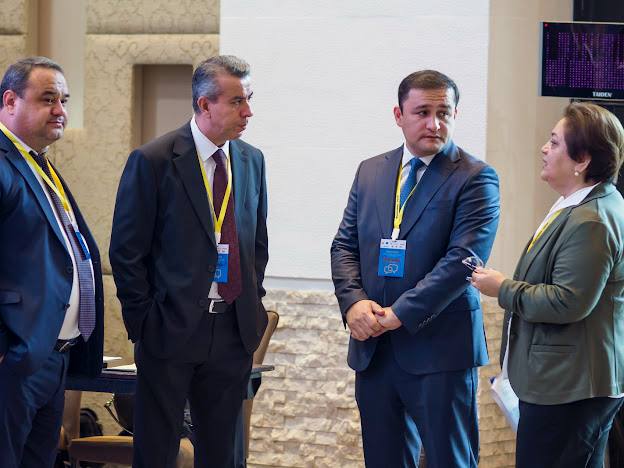
In his opening remarks, EU Ambassador to Tajikistan Radoslav Darski emphasized the importance of mechanisms to build trust between the state and civil society. He stated, "The state, as the primary guarantor of human rights, must ensure that laws, policies, and institutions uphold the dignity and freedoms of all citizens." He also acknowledged the progress made in Tajikistan, noting that civil society organizations are raising awareness and protecting vulnerable groups.
"At the same time, challenges remain, which is why continued reforms, transparent governance, and effective implementation are necessary," Darski added. He pointed to the successful collaboration between the Ministry of Justice's Department of Penal Enforcement and local civil society organizations, which has led to numerous initiatives aimed at protecting the rights of detainees and former prisoners.
"Laws alone are not enough"
Firuz Orzuzoda, Head of the Human Rights Guarantees Department at Tajik President’s Executive Office, underscored the country’s commitment to human rights. "Tajikistan has adopted the National Development Strategy until 2030, the National Human Rights Protection Strategy until 2038, and a series of other documents. Experts have visited Tajikistan 13 times, offering over 1,000 recommendations on human rights issues. Additionally, 20 action plans on human rights have been adopted, and in 2015, the Interdepartmental Council on Domestic Violence Prevention was established," he said.
Gulchehra Kholmatova, Director of Mir Prava, emphasized the role of civil society. "Civil society plays a crucial role in ensuring that human rights are not just enshrined in laws but are actively protected in practice. This Dialogue allows us to work alongside the state to find solutions that will benefit every citizen," she stated.
UN Resident Coordinator in Tajikistan, Mrs. Kavilmadam Ramaswami Parvathy, highlighted four areas where collaboration between the government and civil society is essential: preventing torture, leveraging digital technologies to improve access to justice, penitentiary reform, and promoting gender equality.
"One of the most important steps is preventing torture. While we commend Tajikistan for strengthening its legal framework and monitoring mechanisms, laws alone are not enough. Ratifying the Optional Protocol to the Convention against Torture could pave the way for the establishment of an independent national preventive mechanism. This body, working closely with civil society, could help address issues such as reported deaths in detention, enhancing guarantees, oversight, and accountability," Mrs. Kavilmadam Ramaswami Parvathy stated.
She also pointed to the use of digital technologies in Tajikistan as a tool for improving justice access and transparency, emphasizing that technologies should serve to expand rights and freedoms, rather than create new restrictions.
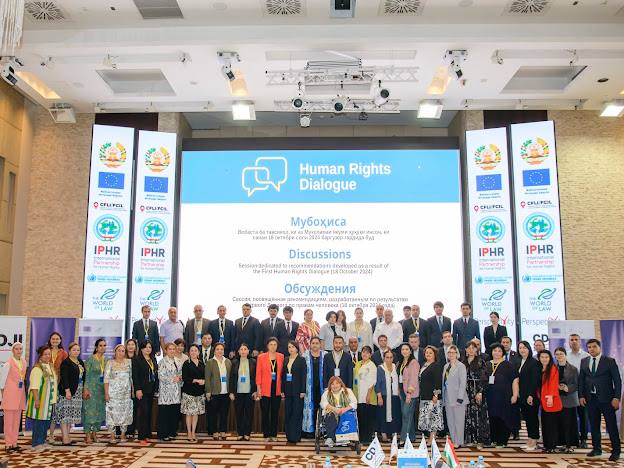
Recommendations for national reforms
At the conclusion of the event, participants agreed on new recommendations to guide national human rights and justice reforms from 2025 to 2030. The recommendations focused on incorporating digital solutions in governance, reforming the penitentiary system, and advancing gender-sensitive approaches.
Working in four groups, participants offered ideas and feedback on the proposed recommendations. These conclusions will be integrated into the development of national reforms and contribute to building a more just and inclusive human rights protection system in Tajikistan.
 Руcский
